Phja
Thap Incense Village, located in Quang Uyen Commune, has long been renowned as
one of the distinctive traditional craft villages of the Nùng An people in Cao
Bang. Passed down through generations, the traditional incense-making craft has
been preserved almost intact using handmade techniques, producing incense
sticks with the gentle fragrance of the mountain forests and embodying profound
cultural values.
For
the people of Phja Thap, incense making is not simply a means of livelihood but
also a source of pride in the heritage passed down by their ancestors. In every
household, from the elderly to younger generations, people know the various
stages of incense making and work together to preserve this traditional craft
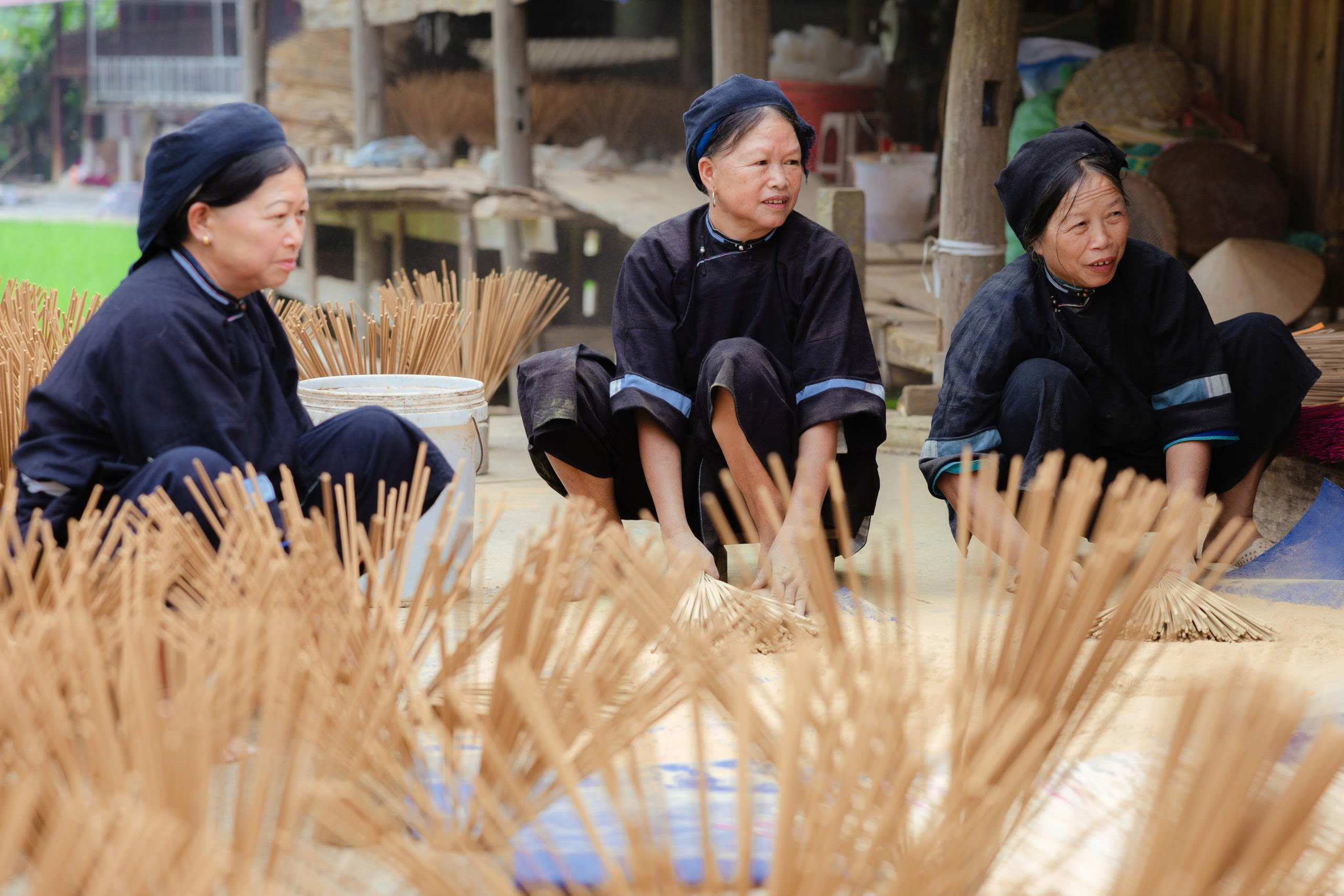
as an integral part of their daily lives. For the Nung An people, incense
making is not merely a seasonal occupation; it has become a familiar part of
community life. In the final months of the year, when demand for incense
increases, the entire village becomes bustling with activity as families
prepare materials, split bamboo-like sticks, mix the incense powder and dry the
incense. The sight of bundles of incense fanning out in brilliant colors under
the sunlight has become an iconic image of Phja Thap, attracting visitors and
photographers who come to explore the village and capture its beautiful
moments.
One
of the distinctive features that has created the reputation of Phja Thap
incense is that all its ingredients are derived from nature and carefully
selected from the surrounding limestone mountain areas. The incense sticks are
made from wild mai trees, known locally in the Tày language as may muoi.
The wood is straight, flexible and resistant to warping after drying. The
incense powder is made from a mixture of fine sawdust, kapok tree bark and,
most importantly, the leaves of the bau hat tree, a forest plant that
naturally provides adhesive properties. These leaves allow the incense powder
to adhere firmly to the sticks without the use of chemical adhesives. The
exclusive use of natural ingredients produces a mild and pleasant fragrance
when burned, with little smoke and without a harsh or overpowering smell. This
distinctive quality has made Phja Thap incense popular for use during
traditional festivals, Lunar New Year celebrations and ancestral ceremonies.
Creating
a complete incense stick requires many consecutive stages, each demanding care,
precision and experience. After the mai wood is harvested, it is cut into
suitable lengths, split into small, evenly sized pieces and carefully smoothed
to form the incense sticks. This stage requires considerable skill to ensure
that the sticks are uniform in size, allowing the incense to burn evenly and
consistently.
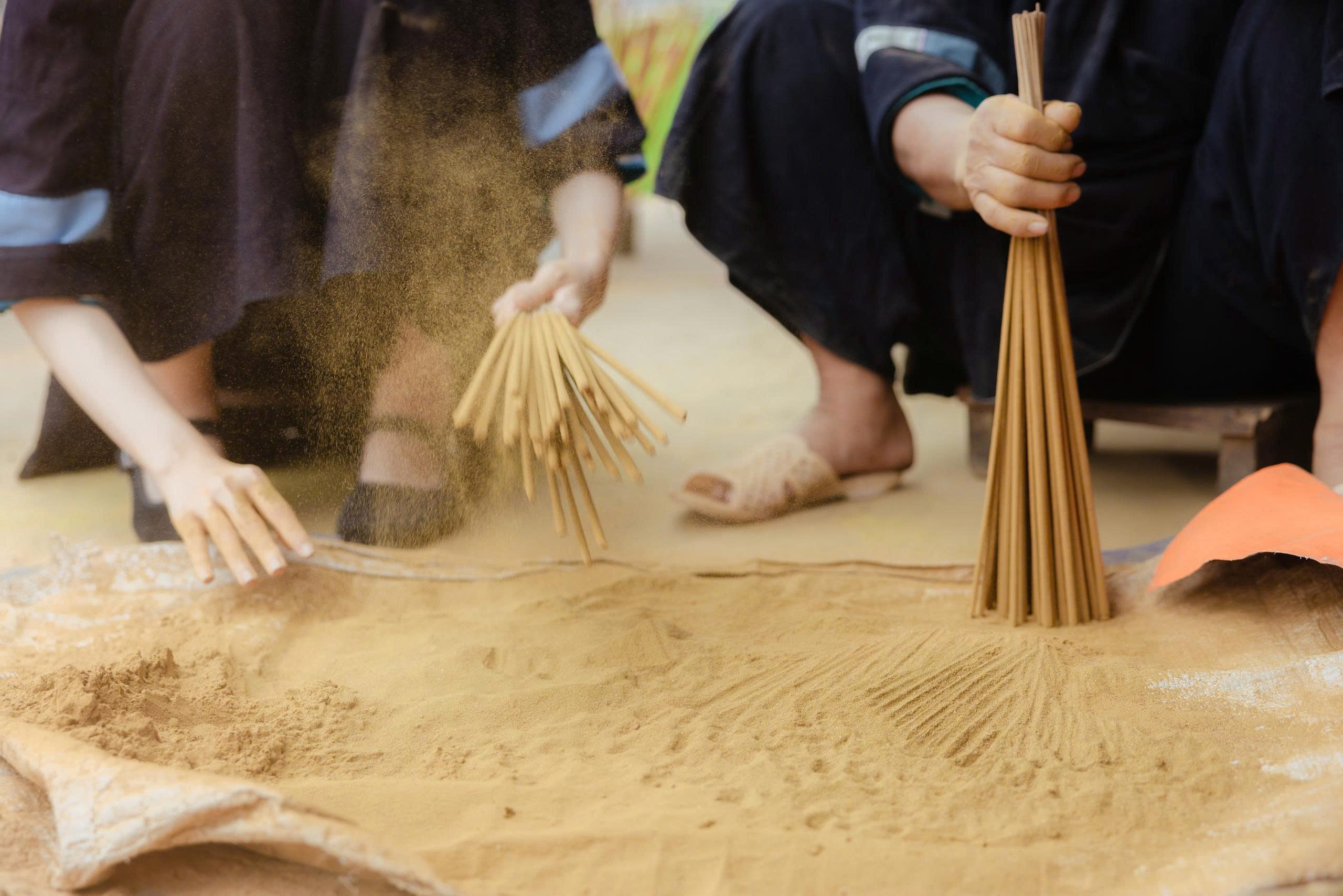
The
bau hat leaves are collected from the forest, dried and ground into a
fine powder. The kapok tree bark is also carefully processed before being mixed
with sawdust in appropriate proportions. This mixture not only provides the
natural fragrance but also determines the durability and quality of the
incense. The makers dip the mai sticks into a solution made from bau hat
leaf powder to create an initial adhesive layer, then roll them evenly through
the incense mixture several times. Each layer must be applied gently and
uniformly so that the incense sticks remain round, firm and free from cracks
during drying.
Once
the incense sticks are finished, they are laid out to dry naturally under the
sunlight. After drying, the lower ends of the sticks are dyed red, a color
traditionally associated with good fortune, prosperity and happiness. The
bundles of incense are then dried once more before being tied into groups of
ten and taken to local markets or supplied to the wider market.
In
Vietnamese spiritual life, incense serves as a bridge between people, their
ancestors and the spiritual values they hold dear. Whenever incense is burned,
people express gratitude and remembrance while offering wishes for peace and
well-being for their families. For this reason, incense makers in Phja Thắp
place great importance on care and precision throughout every stage of
production. Each incense stick must not only be visually appealing but also
meet quality standards, burn evenly and release a gentle fragrance. This is why
the traditional craft continues to be preserved with a deep sense of respect
and responsibility toward the cultural heritage of the community.
Today,
Phja Thap Incense Village is becoming an attractive destination for visitors
seeking to explore the traditional culture of the Non Nước region. Visitors can
walk along the village's small roads, admire the colorful bundles of incense
fanning out under the sunlight, learn about the traditional handmade production
process and even take part in selected stages under the guidance of local
residents. The vivid red color of incense sticks displayed along the roads and
in front of homes creates a distinctive landscape of Phja Thap, offering
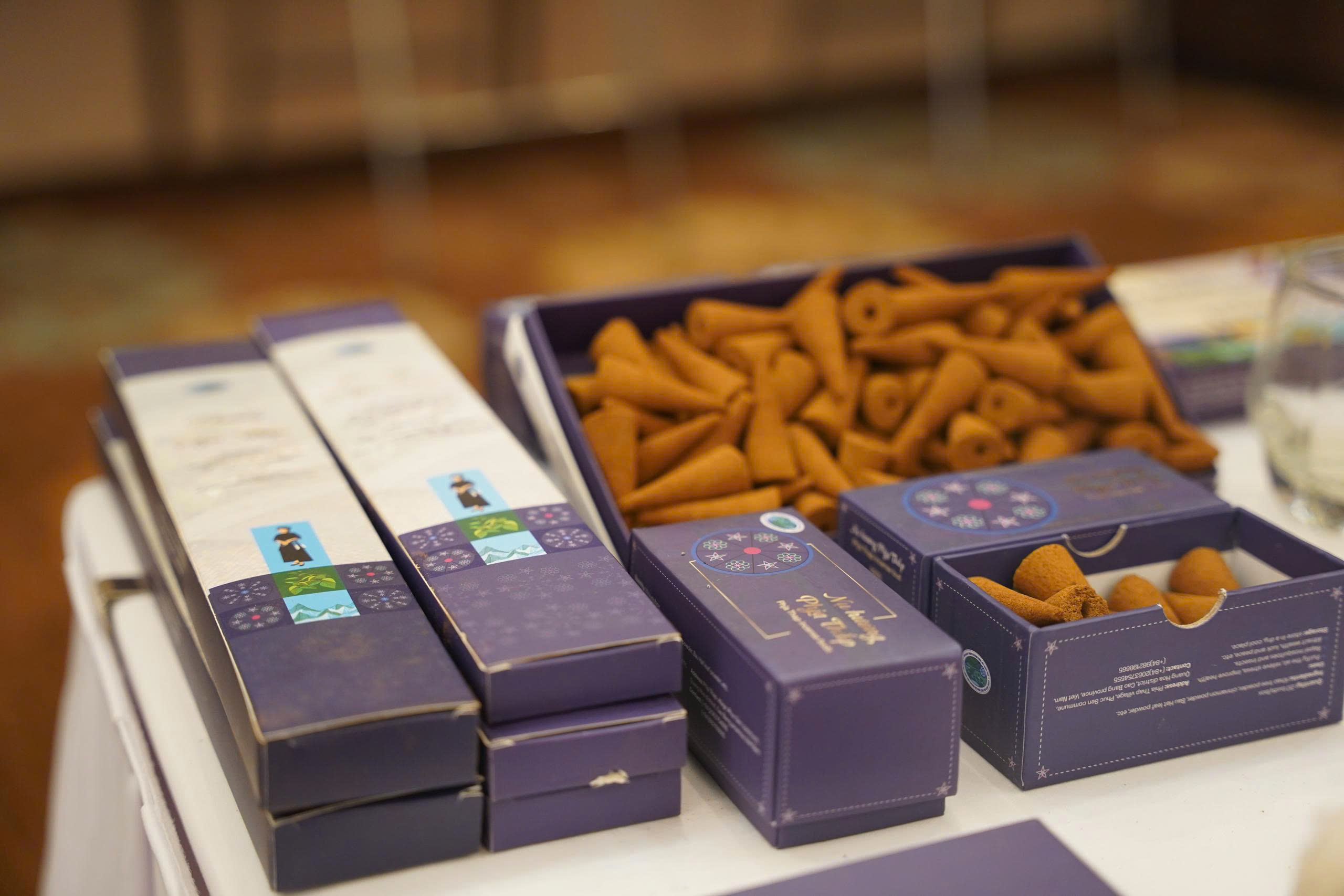
memorable experiences for visitors, particularly photography enthusiasts. In
addition to these experiences, visitors can purchase handmade products from the
village, thereby contributing to local livelihoods and encouraging residents to
continue practicing the traditional craft.
Despite
the growing availability of industrially produced incense, the people of Phja
Thap continue to preserve their traditional craft through the use of natural
ingredients and handmade techniques passed down through generations. This is
not only a way of safeguarding a traditional occupation but also an important
contribution to preserving the cultural identity of the Nung An community.
The
development of the incense village in connection with experiential tourism is
opening up new opportunities to promote local products, increase household
incomes and bring the image of Phja Thap closer to domestic and international
visitors. Each Phja Thap incense stick is a product of diligence, skill and
deep affection for a traditional craft. Its gentle fragrance carries not only
the essence of the mountains and forests of Cao Bang but also the story of a
community that continues to preserve, with enduring dedication, the cultural
values passed down from generation to generation.