Non nuoc Cao Bang Geopark partners conducted an experience exchange to learn from sustainable tourism development models in Ninh Binh and Thai Nguyen Provinces
From August 5-8, the Management Board of Non nuoc Cao Bang Geopark organized an experience exchange tour for its partners to survey and study sustainable and responsible tourism development models associated with conservation and shared responsibility for the environment and society in Ninh Binh and Thai Nguyen provinces.
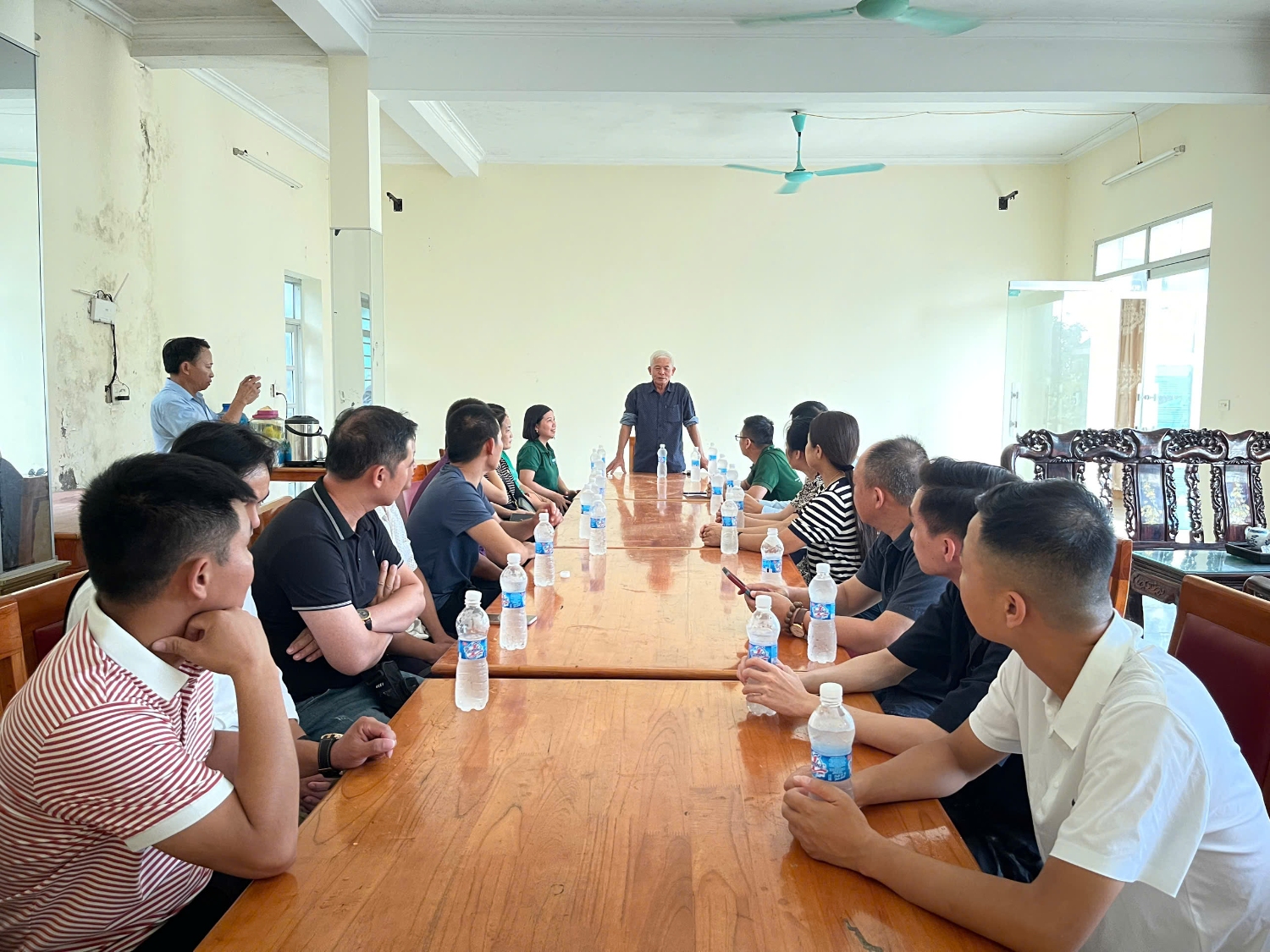 Overview of the meeting between Non nuoc Cao Bang Geopark Partner Network with representatives of Van Long Ecotourism Service Cooperative in Gia Vien Commune (Ninh Binh Province)
As part of the program, members of the Non nuoc Cao Bang Geopark Partner Network held a working session to exchange experiences with representatives of Van Long Ecotourism Service Cooperative in Gia Vien Commune (Ninh Binh Province). Discussions covered organizational structure, management methods, monitoring and inspection mechanisms, as well as local government support policies that help the cooperative operate effectively. The delegation also learned about environmental protection measures currently being implemented at the cooperative, such as on-site waste separation, organic waste recycling, limiting single-use plastics, developing organic agriculture, and preserving native plant and animal species; the roles and responsibilities of cooperative members in safeguarding and promoting the values of the Trang An Landscape Complex. In addition, the delegation conducted a field survey at the Van Long Ecotourism Site to study its environmental ecosystem, service operations, and visitor reception skills. These are key factors in raising community awareness of their role in nature conservation, ecosystem preservation, and promoting sustainable tourism development.
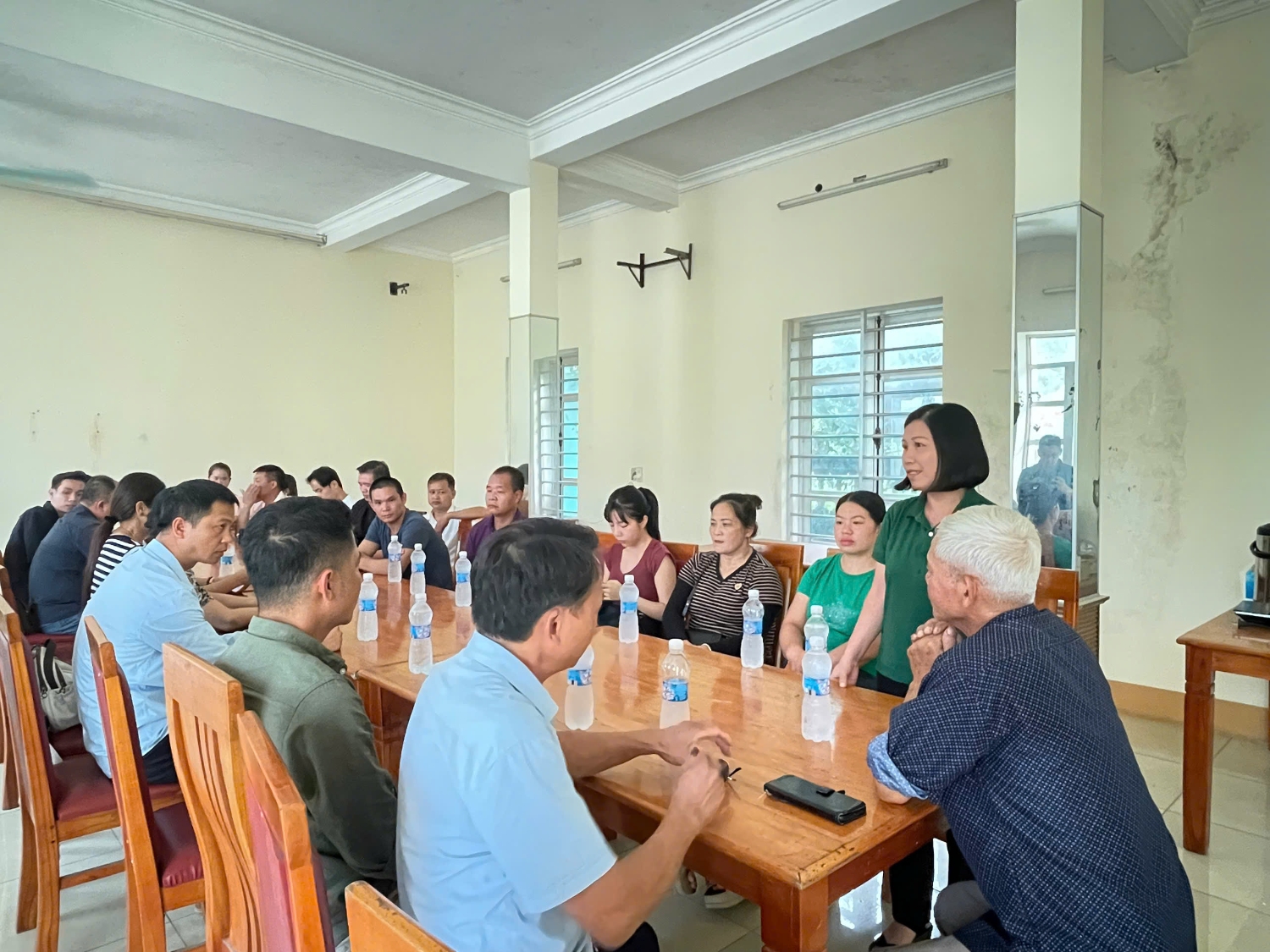 Mrs. Hoang Thi Hue, Deputy Director of the Management Board of Non nuoc Cao Bang Geopark gave remarks at the meeting with representatives of Van Long Ecotourism Service Cooperative in Gia Vien Commune (Ninh Binh Province).
Following the schedule, members of the Geopark Partner Network conducted a field survey at the Sinh Duoc Cooperative in Gia Vien Commune (Ninh Binh Commune). Here, the delegation learned about the management of tourism services, environmental sanitation practices, hospitality skills, and the participation of local residents in tourism activities. The practical lessons drawn from this experience exchange regarding service style, organization of service spaces, promotion of souvenir products, and quality control serve as an important basis for Geopark partners to apply in their own localities.
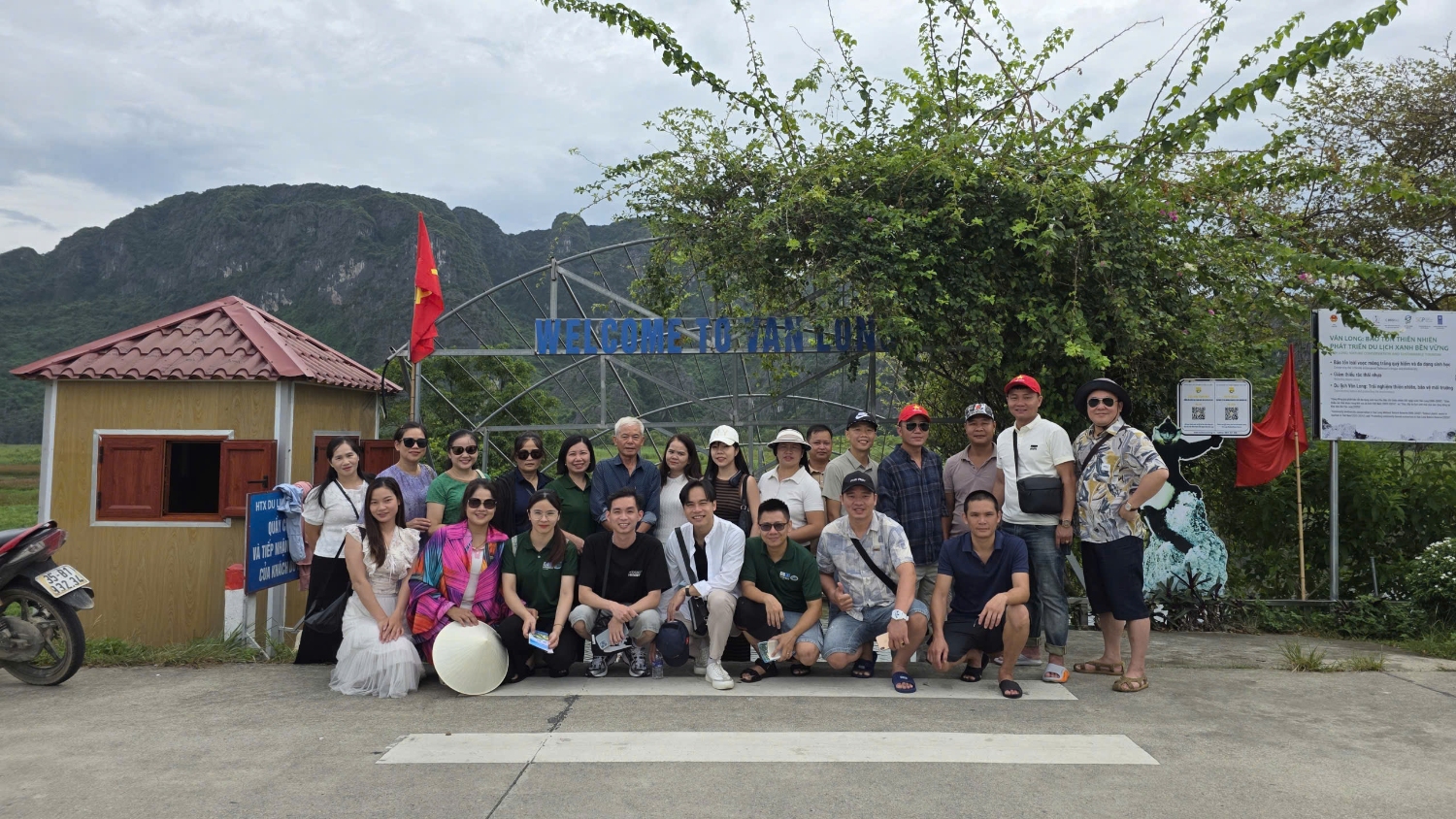 Non nuoc Cao Bang Geopark Partner Network conducted a field survey at Van Long Ecotourism Service Cooperative in Gia Vien Commune (Ninh Binh Province).
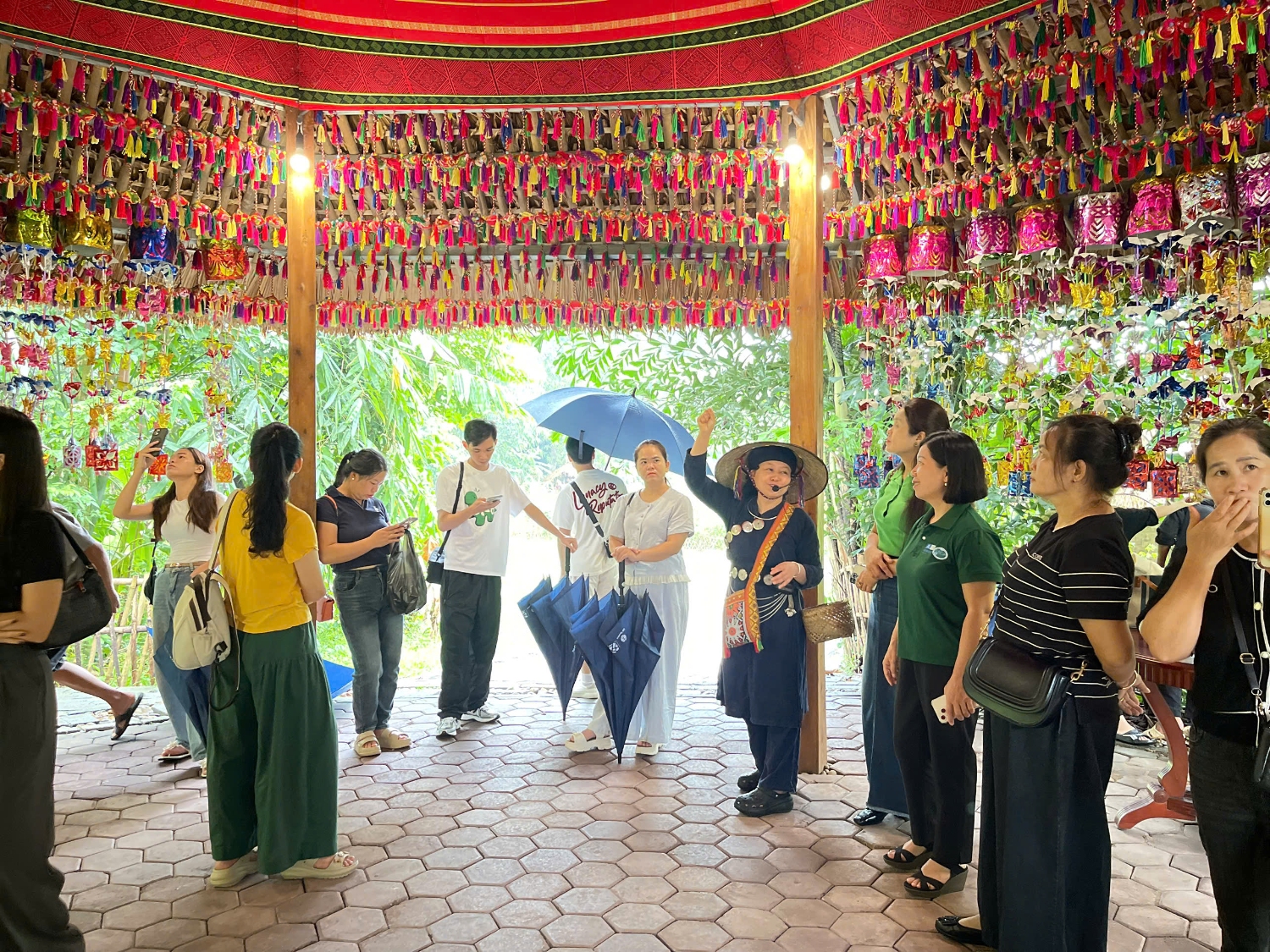 Non nuoc Cao Bang Geopark Partner Network conducted a field survey at the Thai Hai Ecological Ethnic Stilt House Village Conservation Area in Tan Cuong Commune (Thai Nguyen Province).
In Thai Nguyen Province, the delegation conducted a field survey at the Thai Hai Ecological Ethnic Stilt House Village Conservation Area in Tan Cuong Commune to learn about the preservation, management, and promotion of tourism resources. At the conservation area, the traditional cultural values of the Tay ethnic group such as stilt house architecture, indigenous knowledge, customs and traditions, handicrafts, and cuisine are effectively utilized, helping to create an immersive experience space rich in local identity. Notably, the use of environmentally friendly materials, the organization of green–clean–beautiful living spaces, on-site waste treatment, and a cozy, rustic style of welcoming visitors have together shaped a distinctive identity, enhancing both service quality and the tourism experience. Here, the delegation had the opportunity to learn how to exploit the potential of local medicinal herbs, develop stilt house homestay services, diversify traditional culinary, and design experiential tourism models with strong cultural imprints-key factors in improving service quality and increasing livelihood for the community.
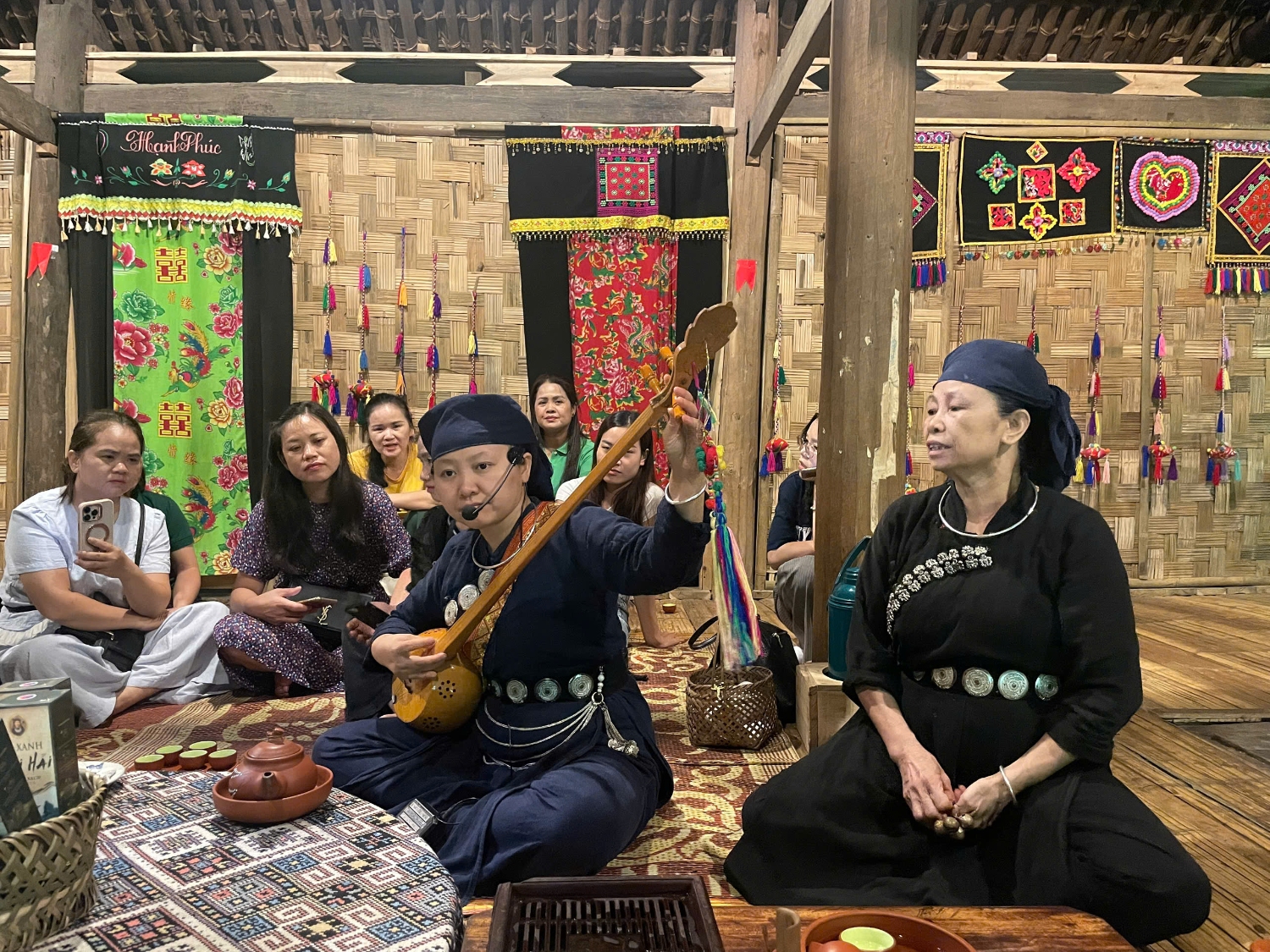 Geopark partners experienced folk song performances at the Thai Hai Ecological Ethnic Stilt House Village Conservation Area in Tan Cuong Commune (Thai Nguyen Province).
At each surveyed site, the Geopark partners not only listened to practical insights from good practices but also directly experienced distinctive services connected to cultural and natural heritage. The members actively engaged in discussions, sharing experiences in organizing and operating tourism activities linked to local identity, with the aim of achieving a harmonious balance between conservation and development.
The study tour created an opportunity for members of the Geopark Partner Network to strengthen connections, share initiatives, and collaborate in implementing community-based tourism practices, particularly in supporting vulnerable groups to participate in the tourism service chain through skills training, product purchasing, destination promotion, and linkages with traditional craft villages. Through this activity, Geopark partners gained a stronger foundation to develop creative and effective tourism models matching with local conditions, thereby promoting local tourism in a fair, responsible, and sustainable manner.
Source: L.T