Indigenous cultures, momentum for the sustainable tourism development in the Geopark territory
Aligned with the trend of sustainable tourism development, harnessing local cultural values is increasingly recognized as a key factor that gives each territory a distinct identity. In Non nuoc Cao Bang Geopark territory, community-based tourism models have been developing in harmony with nature conservation, preservation of local culture, and livelihood improvement for local population, with some positive changes recorded.
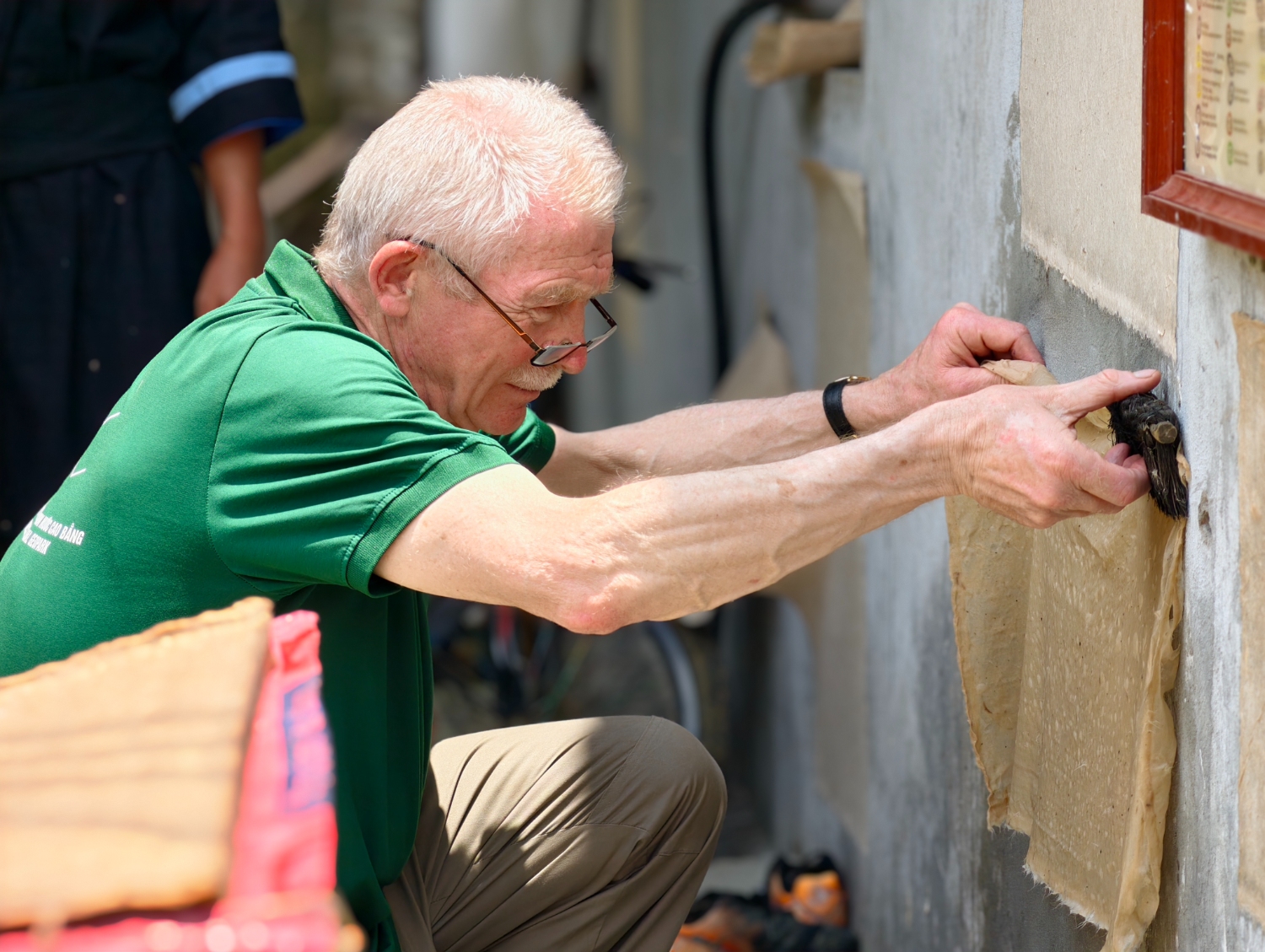 Dr. Kupetz Manfred Reinhard - Chairman of the Muskauer Faltenbogen Geopark Support Association experienced manual steps of producing tradtional paper at Dia Tren village (Quang Uyen Commune).
With its exceptional geological value, majestic natural landscapes, diverse ecosystems, and rich ethnic cultural heritage, Non nuoc Cao Bang Geopark has great potential for sustainable tourism development. In recent years, with joint efforts of the Geopark Management Board, local authorities, and residents, many community-based tourism models while conserving nature and preserving traditional culture have been initiated and expanded. As a result, quite a number of tourism products that deeply reflect local cultural identity related to specific communities and villages within the Geopark territory have been developed, and gradually diversified in content and service quality to better meet the experiential needs of domestic and international visitors.
A remarkable highlight in linking sustainable tourism development with cultural values is the restoration, preservation, and promotion of traditional crafts for tourism activities. Accordingly, these craft products have not only improved in quality but have also been enhanced in design and packaging to suit modern tastes and trends. Notably, every item embraces cultural values, infused with folktales, local beliefs, or legends connected to the life of the community. Thus, distinctive souvenir products have been developed, helping to spread local cultural values and opening opportunities for income improvement and sustainable livelihoods for local residents.
 UNESCO evaluators conducted a field survey at Phja Thap incense village (Quang Uyen Commune).
In parallel, traditional cultural experiential activities are being organized more methodically and attractively. Rather than just places to stay, community-based tourism models are becoming vibrant cultural spaces where visitors can authentically experience everyday life, customs, and traditional crafts of local people. On their journey exploring the Geopark, tourists not only join locals in their daily activities such as weaving brocade, making corn liquor, traditional cakes, playing folk musical instruments but also have the opportunity to enjoy local cuisine and get immersed in smooth and deep Then, Sli, and Luon melodies.
Communities engaged in tourism are also increasingly attentive to maintaining and upgrading living spaces in an environment-friendly way that harmonizes with natural scenery. Many households providing tourism services have received support to renovate their homes and homestays in traditional architectural styles of their ethnic group, ensuring both guest comfort and preservation of rustic, distinctive architechture. Local participatory management organizations such as cooperatives, groups for community-based tourism, and steering committees for monitoring community-based tourism development, etc. have also been established and are operating effectively. These models help clearly assign tasks, ensure benefit tranparent sharing, and enhance residents’ participation in cultural preservation and tourism development, laying the foundation for a genuinely sustainable community-based tourism ecosystem. With support from local authorities in preserving traditional craft villages associated with tourism development and livelihood improvement, several community-based tourism villages and craft villages in the Geopark territory have realized their potential and transforming into attractive destinations such as Dia Tren paper village, Phja Thap incense village (Quang Uyen commune), Khuoi Ky stone village (Dam Thuy commune), Hoai Khao community-based tourism village (Thanh Cong commune), and Khuoi Khon community-based tourism village (Hung Dao commune), etc.
During the 2nd revalidation mission of the Non nuoc Cao Bang UNESCO Global Geopark, the local community-based tourism model received positive feedback from UNESCO evaluators. Ms. Chan Yu Nam, Head of the Hong Kong Geopark and member of revalidation delegation stated that she was impressed by the distinctive natural beauty, rich culture, and warm hospitality of the local people. Each experience clearly demonstrates the community’s pride and awareness in preserving their culture. This is the key element contributing to developing sustainable tourism.
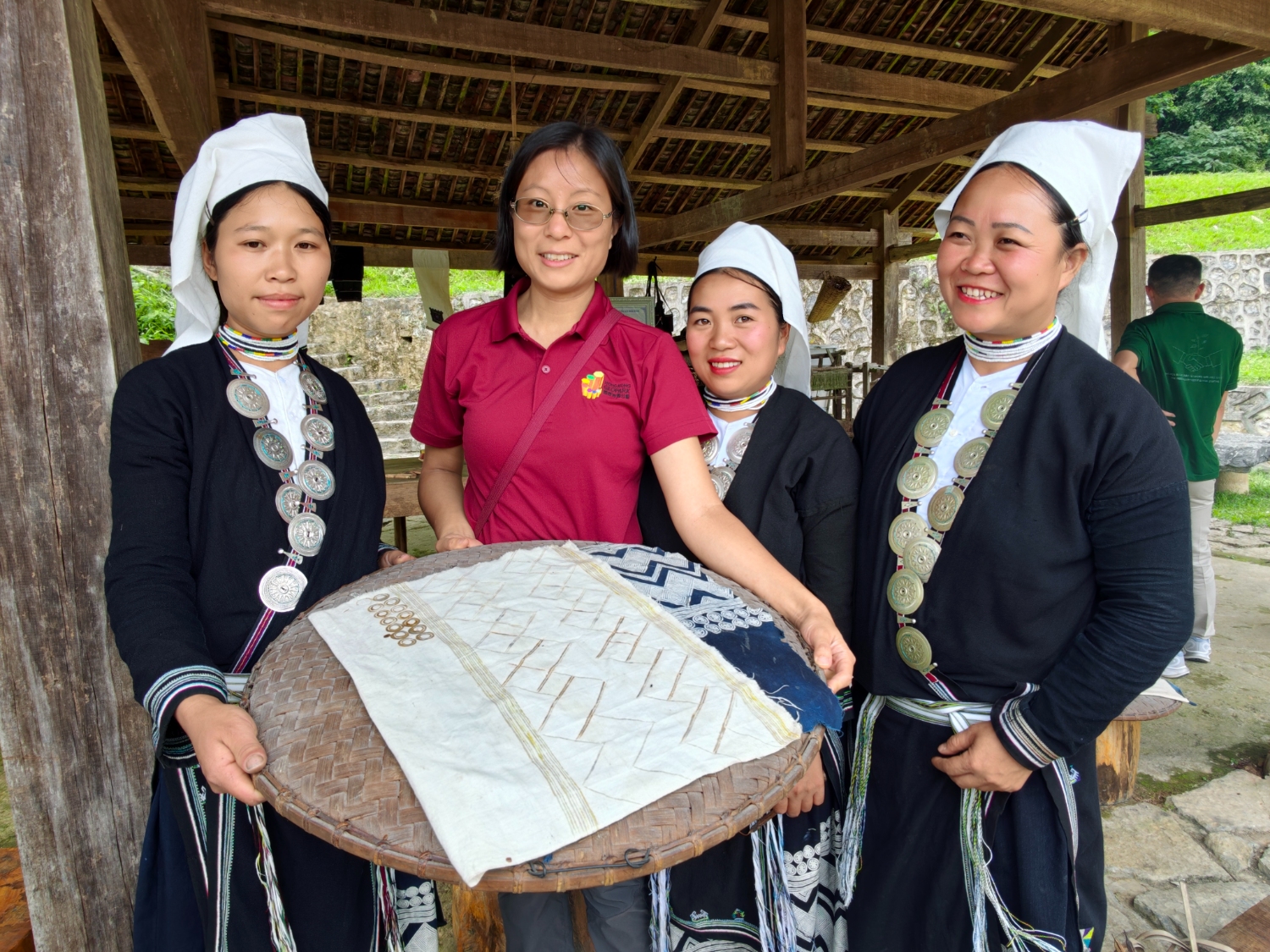 Printing patterns on fabric with beeswax, an experiential activity tourists can try when visiting Hoai Khao village (Thanh Cong Commune).
Due to efforts implementing comprehensive sustainable tourism solutions, in the first half of 2025, Cao Bang’s tourism industry achieved many positive results. Total tourist arrivals to the province reached approximately 1,520,063, a 47.7% increase compared to the same period of the previous year, achieving 60.8% of the annual target. Among them, international visitors reached an estimated 57,922 (up 176.8%), and domestic tourists reached about 1,462,141 (up 44.3%). Total tourism revenue was around VND 1,543 billion, a 95.8% increase year-on-year, equivalent to 77.1% of the annual plan; average hotel occupancy was about 55%. These figures demonstrate strong recovery momentum and growing appeal of Cao Bang tourism, especially community-based tourism products representing local values.
To further promote tourism development in a attractive, culturally rich, and sustainable manner, the Management Board of Non nuoc Cao Bang Geopark is tightly coordinating with departments and localities to implement multiple solutions. These focus on building capacity for tourism practitioners, especially in remote, disadvantaged areas; investing to improve tourism infrastructure; preserving and promoting traditional cultural values through commication activities that engage the youth with cultural heritage. Meanwhile, communication and marketing of tourism products are being intensified on digital platforms to expand the market, enhance competitiveness, and attract social investment for tourism development.
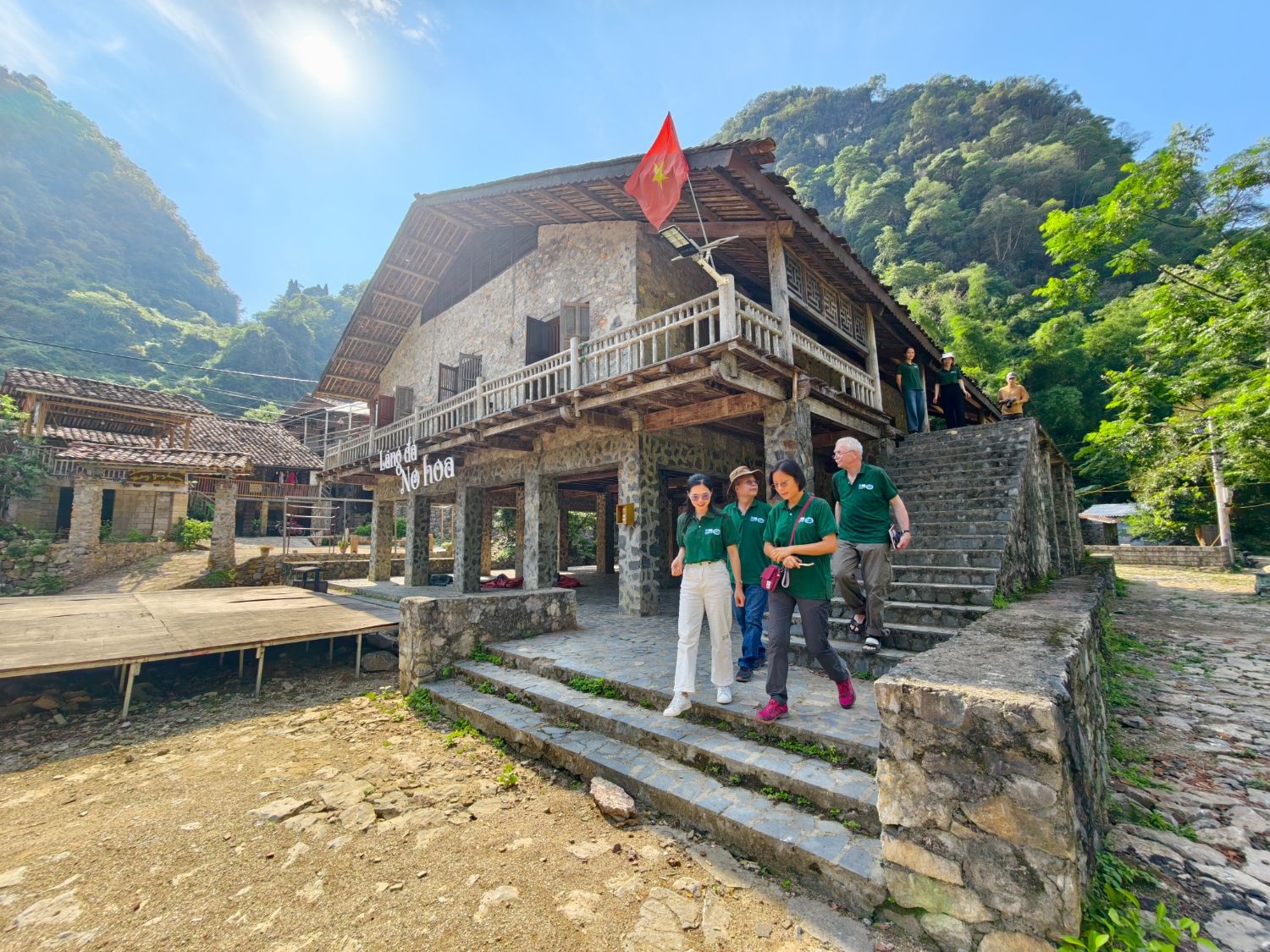 Khuoi Ky stone village has preserved the architecture of stone stilt-houses of the Tay ethnic group through generations.
Developing tourism while conserving and promoting local cultures not only contributes to improving residents’ livelihoods and protecting the ecological environment but also stimulates pride and heritage preservation awareness in the community. Each village, craft, and cultural story is a vibrant piece of a colorful picture of Cao Bang tourism. Thus, forming a solid foundation toward a more professional, sustainable tourism of Non nuoc Cao Bang Geopark rich in cultural identity.
Source: Luong Thao