Exploring the Geopark eastern route: “Experience Traditional Cultures in a Wonderland”
The journey along the eastern tourism route, “Experience Traditional Cultures in a Wonderland,” in the Non nuoc Cao Bang UNESCO Global Geopark (UGGp) enables visitors to take a walk back in time to a place where majestic nature harmoniously intertwines with the traditional culture treasure of local communities.
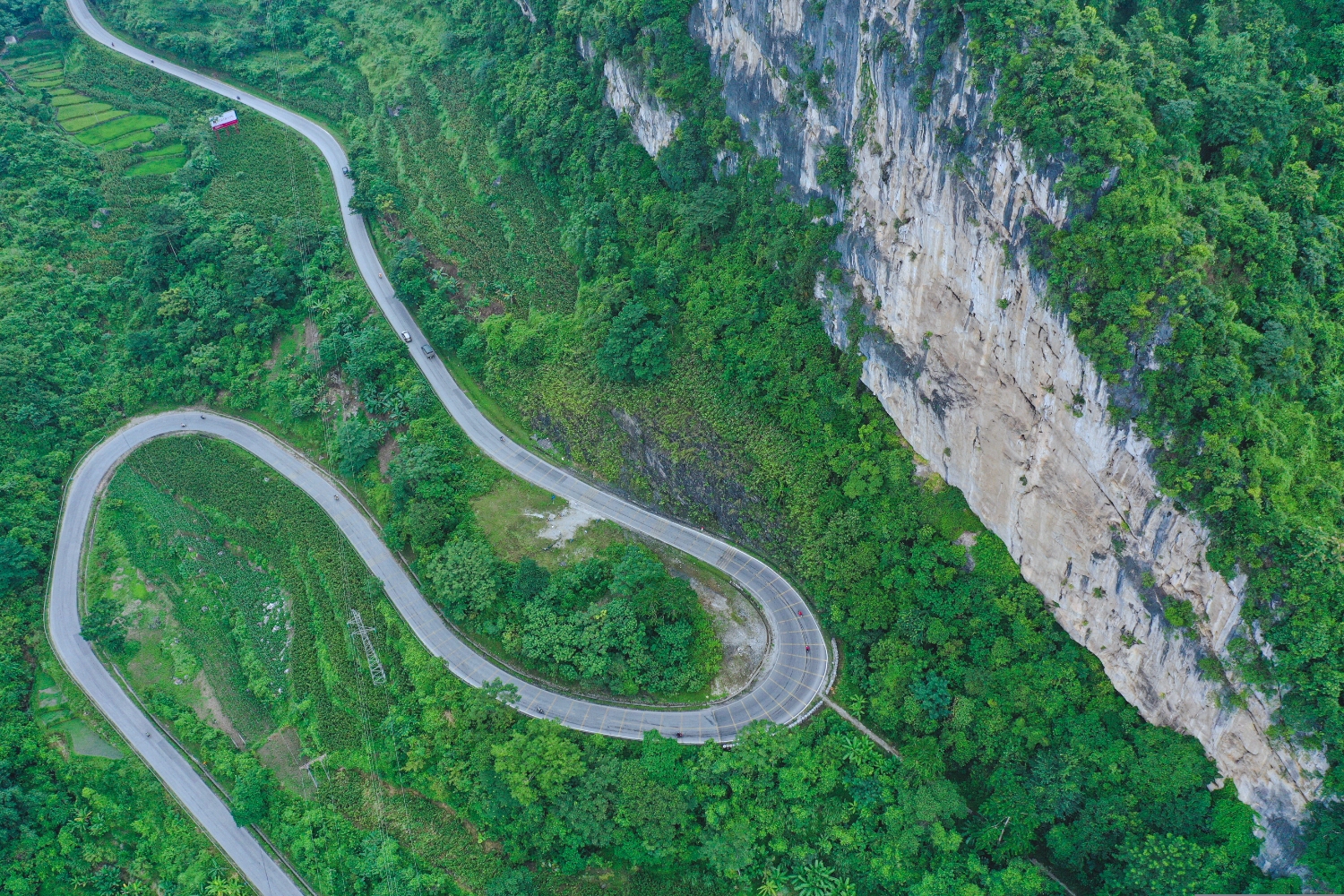 Ma Phuc Pass (Tra Linh Commune)
Traveling eastward along National Highway 3, the natural scenery unfolds like a vivid ink-wash painting with towering limestone mountains, endless green rice fields, and tranquil villages nestled peacefully at the foot of the mountains. The more they go, there more pristine, serene beauty of a land imbued with hundreds of millions of years of geological sediment visitors find. Together, these elements create a simple yet profound symphony of nature and cultural heritage at a northern frontier.
The journey begins at Ma Phuc Pass (Tra Linh commune), one of Cao Bang’s most beautiful mountain passes. Stretching over 3.5 km and sitting at an altitude of 700 m above sea level, the pass winds through seven steep slopes flanked by vertical limestone cliffs. About 260 million years ago, In this area, many submarine volcanoes were active. Erupted under sea water the lava cooled down very quickly to result in rounded, stacked pillows (pillow lava). Besides the exceptional geological interest Ma Phuc pass is also a place of intangible heritage. According to legend, in the 11th century, a leader of the Nung people named Nung Tri Cao once returning from a patrol along the border faced this high, winding and steep pass, and his horse was crippled and could not move on. The pass since then was named Ma Phuc, literally “a kneeling horse”.
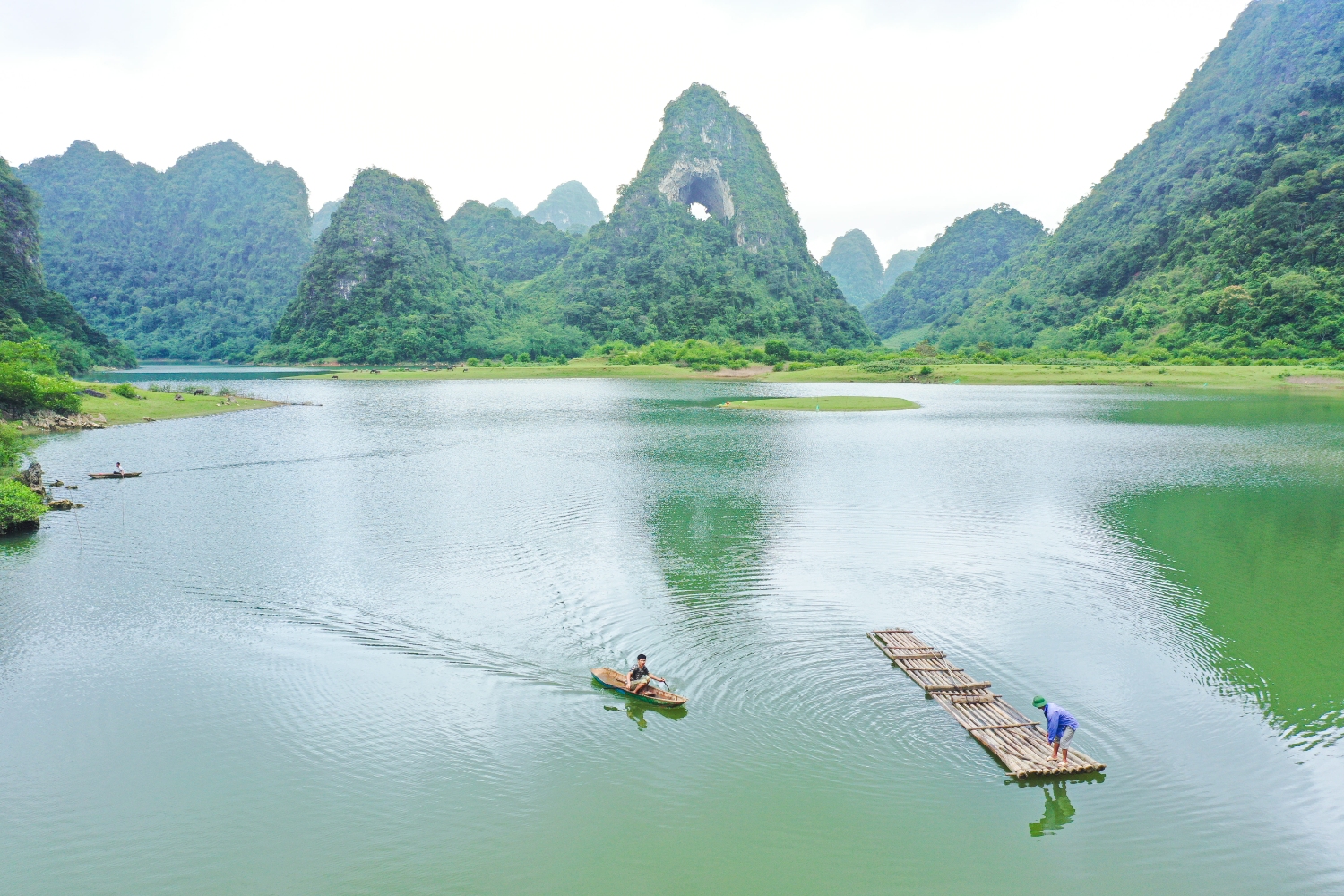 Mountain Angel Eye (Tra Linh Commune).
Continuing the journey along the Eastern route, travelers arrive at the “Moutain Angel Eye” (Tra Linh commune), one of the Non nuoc Cao Bang Geopark’s most striking geological sites of international significance. Mountain Angel eye is in fact a rounded through-going cave c.50m in diameter and c.50m high above the lake. The present day altitude of the cave is due mainly to recent tectonic uplift movements. The cave has developed in a tower karst landscape at the altitude of c.650-700m asl. During the rainy season, the lake fills and mirrors the surrounding peaks, creating a picturesque scene; in the dry season, the receding waters reveal lush grasslands like a hidden prairie amidst the mountains. The pristine and majestic beauty of this site makes it an unforgettable stop on the borderland journey.
Along the way, visitors can explore traditional craft villages where the locals have preserved and nurtured their cultural heritage from generations to generations. In Dia Tren village (Quang Uyen commune), the craft of traditional paper-making has been practiced over generations, intertwined with the spiritual beliefs and rituals of the Nung An people. The paper production process which is entirely manual process from selecting raw materials, pounding, filtering pulp, and sun-drying sheets, etc. reflects the meticulousness, patience, and cultural pride of the community.
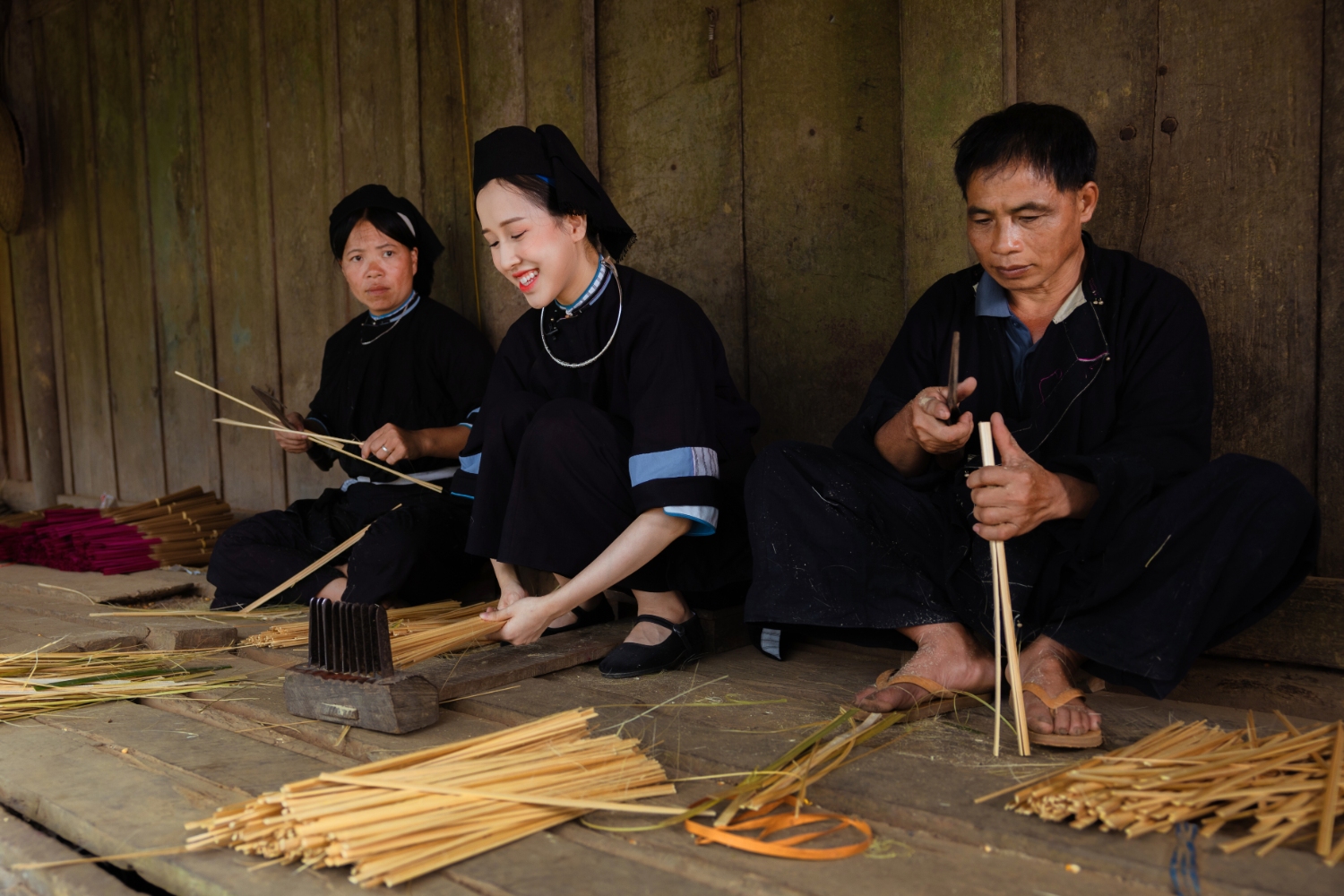 The craft of incense-making in Phja Thap has been passed down over generations.
Journeying onwards, visitors can stop by Phja Thap incense village (Quang Uyen commune), - one of the provivncial craft village of more than hundred years old. Phja Thap incense is made from natural herbs such as cinnamon, soapberry, and “bau hat”, emitting a gentle, forest-fresh fragrance. Here, visitors may find Nung An women sitting on wooden stilt house porches, deftly rolling incense sticks with their skillfull hands. Every step of the process is handled with care and respect, as though continuing a sacred tradition inherited from ancestors.
At Pac Rang forging village (Quang Uyen commune), the rhythmic clanging of hammers and the glow of forges bring to life a craft village. The craft was recognized in 2019 as a National Intangible Cultural Heritage. Only by their patience and rudiment forges, generations of skilled Nung An artisans here create sharp, durable farming tools sought after throughout the region. These products not only serve practical purposes in daily life but also embody the essence of an ancestral craft preserved and passed down through generations.
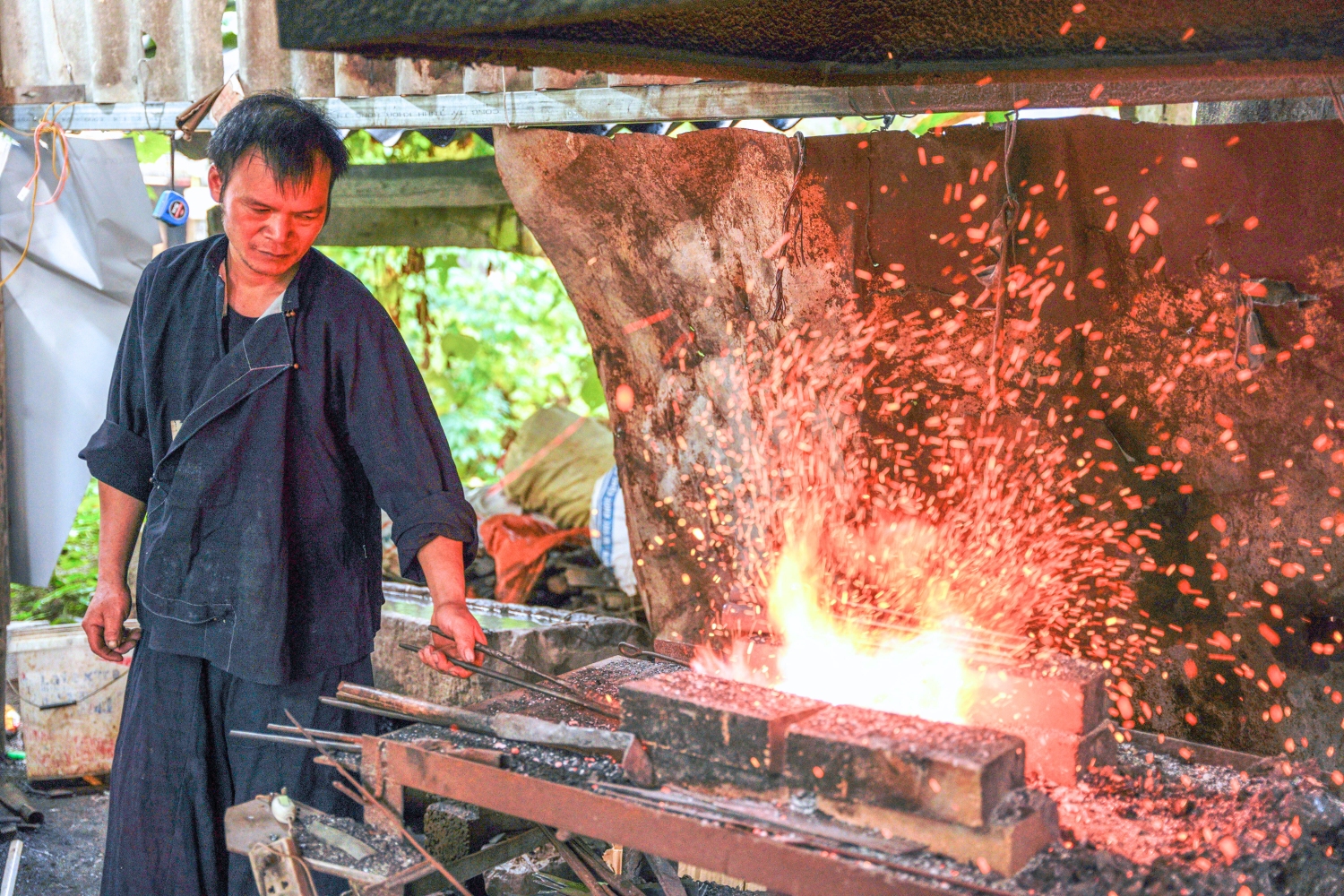 In 2019, forging craft at Pac Rang village was recognized as a National Intangible Cultural Heritage.
The craft villages are more than repositories of cultural memories, indigenous languages and communities’ lifestyle, they also represent regional identity. Visiting these villages offers travelers authentic glimpses into daily life, local customs, and artisanal craftsmanship, showcasing cultural continuity across generations.
Leaving the craft villages behind, the journey leads to Nguom Ngao Cave (Dam Thuy commune), one of northern Vietnam’s most magnificent caves. Over 2,000m long, it boasts glittering stalactites and stalagmites shaped over millions of years into fantastical forms like golden and silver waterfalls, heaven-supporting pillars, upsidedown lotus thrones, and terraced fields. Since 2021, the nearly 3 km-Ban Thuon branch has been opened, offering adventurous travelers an off-the-beaten-path experience with climbing, stream crossing, and exploring untouched passages.
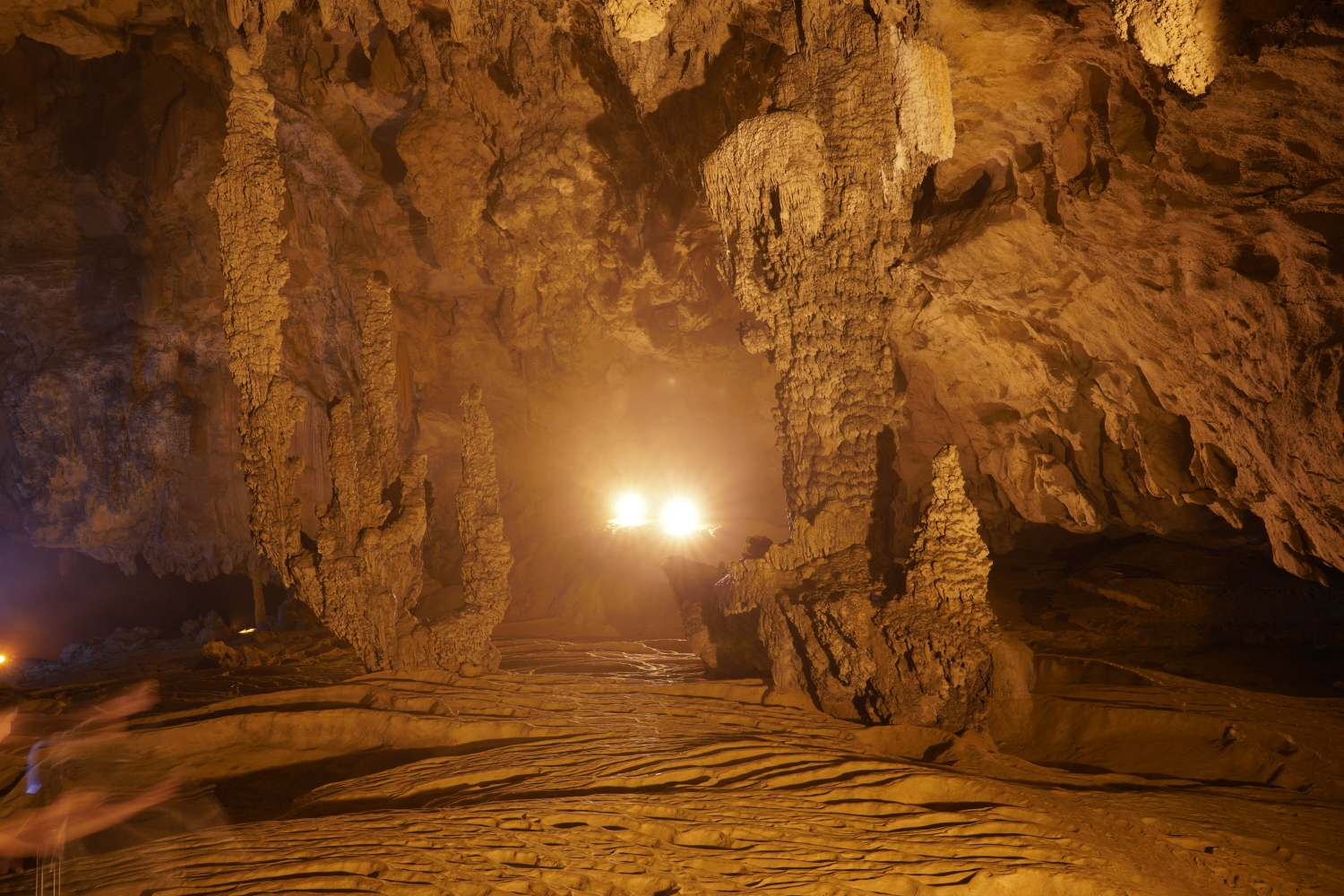 Nguom Ngao cave (Dam Thuy Commune)
Near Provincial Road 206, en route to Nguom Ngao Cave, lies Khuoi Ky stone village (Dam Thuy commune). This distince centuries-old village is part of the Ban Gioc Waterfall tourism complex, spanning about 10,000 m². Despite the passage of time, the stone stilt village retains its traditional customs and exudes a timeless, legendary charm amidst the vast borderland mountains.
Just 4 km from Nguom Ngao Cave, Ban Gioc Waterfall (Dam Thuy commune) is considered one of Vietnam’s most beautiful waterfalls and ranks as the fourth largest among transboundary waterfalls and among the world’s top 10 most spectacular waterfalls. From afar, cascading torrents of white water plunge down multi-tiered rocky steps, creating a misty spray. The waterfall’s thunderous roar reverberates through the primeval forest, like an everlasting symphony of nature. Visitors can take bamboo rafts to the waterfall for an up-close view or join a cross-border tour at the Ban Gioc – Detian scenic area to admire it from different perspectives.
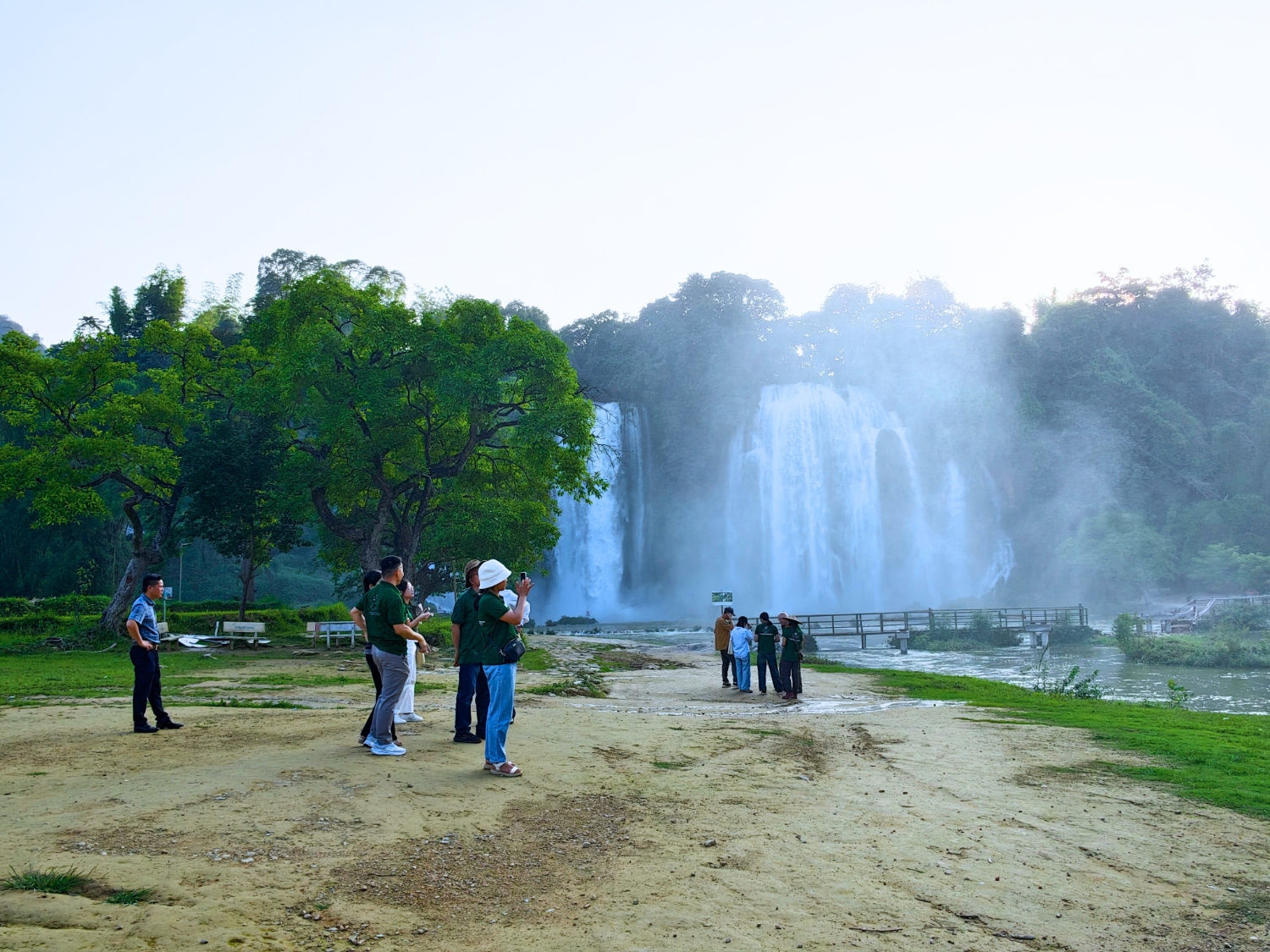 Visiotors exploring Ban Gioc waterfall (Dam Thuy Commune)
Not far from Ban Gioc waterfall, Truc Lam Ban Gioc Pagoda (Dam Thuy commune) rests serenely on Phia Nhan Mountain. As the first Buddhist temple built in Vietnam’s northernmost border area, it embodies traditional Vietnamese Buddhist architecture and serves as a spiritual sanctuary for locals and a peaceful retreat for travelers seeking peacefulness in the hustle and bustle of life. From the temple yard, looking afar, the majestic scenery of Ban Gioc waterfall and Quay Son river blends with the immense green fields and mountains creating a tranquil, dreamlike painting.
Beyond these highlights, the Eastern route of the Non nuoc Cao Bang Geopark also features other cultural and geological treasures such as Bach Linh Temple, the Magic Stone, water wheels, and the little Ban Gioc. Each stop is a unique piece completing the vibrant mosaic of Cao Bang’s natural and cultural heritage. Throughout the journey, visitors can get immersed in unforgettable cultural experiences, listening to the soulful Then songs and the sweet sounds of the Tinh lute, savoring local delicacies like canarium sticky rice, roasted duck, and smoked sausages. Together, these moments form a symphony of memory and emotion, connecting travelers deeply with the nature, culture, and heritage of Cao Bang.
As the Eastern journey concludes, visitors carry with them the lingering essence of the borderland, a place where beauty quietly radiates through heritage, culture, and community spirit. Building on this foundation, the Non nuoc Cao Bang UGGp writes a story of sustainable development harmoniously combining cultural preservation and innovation rooted in indigenous knowledge and local pride.
Source: Luong Thao