14/08/2026
Connecting Music with Cultural Tourism in the UNESCO Global Geopark
Visitors to the Non Nuoc Cao Bang UNESCO Global Geopark are captivated not only by its spectacular landscapes but also by the rich cultural heritage embodied in the melodies of Then singing and the resonant sounds of the Tinh lute. Here, music is more than a performance—it is an integral part of the visitor experience, where emotions are guided by traditional melodies. This unique cultural asset is creating new opportunities for Cao Bang to strengthen the connection between music, tourism, and cultural heritage.
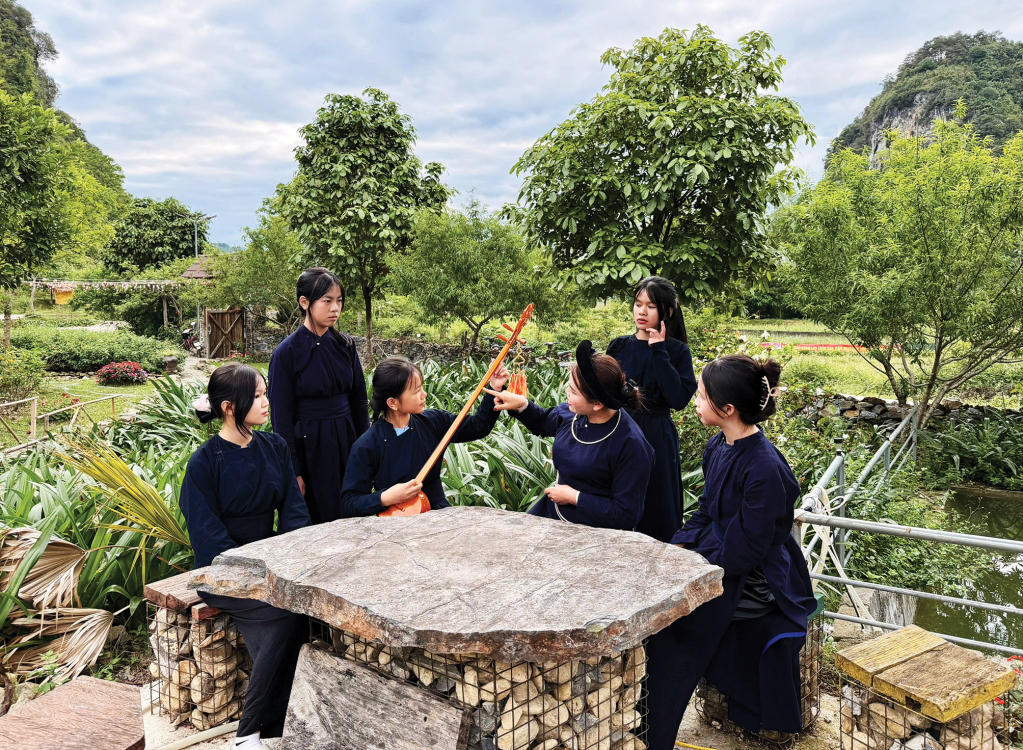
The Then practice of the Tay and Nung ethnic groups, accompanied by the Tinh lute and its distinctive melodies, has long held a special place in the spiritual life of local communities in Cao Bang. Beyond being a form of traditional folk performance, Then is closely associated with indigenous beliefs, reflecting the community's worldview, philosophy of life, and aspirations for peace, prosperity, and well-being. Over generations, this heritage has been carefully preserved and promoted. Today, Then singing and Tinh music are increasingly being developed as a distinctive cultural tourism product, enriching visitors' experiences while opening new pathways for sustainable heritage conservation and development.
Within the Non Nuoc Cao Bang UNESCO Global Geopark, the integration of Then singing and Tinh music into tourism has evolved beyond stage performances toward immersive, community-based experiences. Visitors can participate in cultural gatherings in local villages, listen to performances by traditional artisans, learn about the meaning behind each melody, and even try singing Then or playing the Tinh lute in its authentic cultural setting. This approach not only preserves the heritage as a living tradition but also enhances visitor experiences, encouraging longer stays and greater tourism spending in Cao Bang.
Sharing her experience as the owner of Yen Nhi Homestay in Dam Thuy Commune, Ms. Ly Thi Diep said:
"Then singing and the Tinh lute have been part of our lives for generations. Through our local cultural club, we practise to preserve our traditions while performing for visitors at Khuoi Ky Stone Village. We also teach younger generations in the village and are always happy to introduce visitors to basic Then melodies and Tinh lute techniques so they can experience them firsthand. Seeing visitors enjoy the performances and watching our children develop a love for Then inspires us to continue preserving this cultural heritage."
Thanks to the dedication of local communities, Then singing and Tinh music have become one of the cultural highlights for visitors to Khuoi Ky Stone Village. Carlo Rossi, a visitor from Italy, shared:
"I was truly impressed by the cultural atmosphere here. The music of Then and the sound of the Tinh lute are unlike anything I have experienced before—both peaceful and deeply moving. What made it even more special was that we were not just spectators; local people invited us to try singing and playing the instrument ourselves. It was an authentic and memorable experience. I could clearly feel the strong connection between the local people and their traditional music, and that made my visit to Cao Bang even more meaningful."
Alongside community-led initiatives within the geopark, major provincial events have demonstrated how music is becoming a central element in the tourism value chain. At cultural festivals, tourism weeks, and promotional events, Then singing and Tinh music are no longer presented merely as stage performances but are thoughtfully integrated as immersive cultural experiences, helping to shape the unique cultural identity of each event.
Music also enriches everyday urban life through regular performances held at Kim Dong Walking Street during weekends. In this open public space, songs celebrating the Communist Party, President Ho Chi Minh, and Cao Bang's revolutionary heritage are performed alongside traditional Then melodies and the sounds of the Tinh lute, creating a harmonious blend of tradition and contemporary spirit. More than public entertainment, these performances bring local history, culture, and identity to life in an engaging and accessible way. Music thus serves as a bridge connecting residents and visitors, promoting the province's revolutionary heritage while enriching the urban tourism experience.
The incorporation of traditional music into performances, photo spots, and community-based tourism experiences has significantly enhanced the attractiveness of local destinations and encouraged visitors to extend their stays. As a result, related sectors—including accommodation, cuisine, handicrafts, and local specialty products—have also benefited, creating stronger links between culture and the local economy. Many homestays and community-based tourism sites now offer Then singing and Tinh music experiences as signature activities that encourage visitors to stay longer while generating additional income for local residents.
Mr. Trieu Kim Cuong, owner of Nasan Greenfarm, noted:
"Today's travellers are increasingly seeking authentic local experiences rather than standardized tourism services. Preserving traditional living spaces and naturally incorporating ethnic music into visitors' experiences creates a much stronger sense of authenticity. Music is no longer simply something to see or hear—it inspires visitors to explore the deeper cultural values of the region and encourages them to engage with Cao Bang's community cultural spaces."
According to Associate Professor Dr. Tran Tan Van, Member of the UNESCO Global Geoparks Council and former Director General of the Vietnam Institute of Geosciences and Mineral Resources, Cao Bang should capitalize on the region's outstanding cultural resources by developing tourism products centred on traditional music. Such initiatives would gradually establish a distinctive cultural tourism ecosystem and further enhance the destination's appeal to both domestic and international visitors.
As part of its strategy to preserve and promote cultural heritage through sustainable tourism development, the Management Board of the Non Nuoc Cao Bang UNESCO Global Geopark has implemented a range of practical initiatives to bring traditional music closer to the public. These include organizing competitions and cultural exchange programmes dedicated to preserving and promoting traditional folk music, particularly Then singing and Tinh music, while incorporating these performances into major events. Notably, during the 8th Asia-Pacific UNESCO Global Geoparks Network Symposium, Then singing and Tinh music were presented as one of Cao Bang's signature cultural highlights, introducing the province's rich heritage to international delegates and demonstrating its commitment to linking heritage conservation with sustainable tourism development.