As part of the journey to explore the Non Nuoc Cao Bang UNESCO Global Geopark, the western tourism route “Experience Phja Oac – The Mountain of Transformation” offers visitors unique and memorable experiences. Within just one day, travellers can immerse themselves in pristine nature, experience the peaceful lifestyle of highland communities, and discover indigenous cultural values preserved through generations.
As the first rays of sunlight penetrate the thin morning mist, the exploration of the western tourism route begins. From Phja Oac – Phja Den National Park, a winding road through primeval forests gradually leads visitors into the high mountains, where the air becomes cool and exceptionally fresh. Known as the “green lung” of Cao Bang, Phja Oac – Phja Den National Park features a diverse ecosystem with many rare species of flora and fauna. Phja Oac Peak rises 1,931 metres above sea level, creating a mild climate throughout the year, with cool summers and winters that often bring frost and, during severe cold spells, even snowfall.
Walking beneath the ancient forest canopy, visitors can encounter moss-covered old-growth trees, orchids clinging to rocky cliffs, and the sounds of forest birds echoing through the vast mountains. When clouds descend along the mountainsides, the entire forest is enveloped in mist, creating a mysterious and enchanting landscape that is both pristine and captivating.
From the summit of Phja Oac, visitors can gaze across endless mountain ranges stretching towards the horizon, with peaceful villages nestled in the valleys below. This scenery not only reveals the majestic beauty of nature but also reflects a region that is gradually developing tourism based on the conservation of ecosystems and local cultural values.
Ms. Nguyen Thi Lan, a visitor from Hanoi experiencing the western tourism route for the first time, shared:
"Previously, I only knew Cao Bang through Ban Gioc Waterfall and the Special National Relic Site of Pac Bo. Coming to Phja Oac, I discovered a completely different beauty with primeval forests, a cool climate, and a rare sense of tranquillity. This is not simply a trip for taking photos; it is a journey to truly connect with nature. I believe anyone who loves mountains and forests should visit this place at least once."
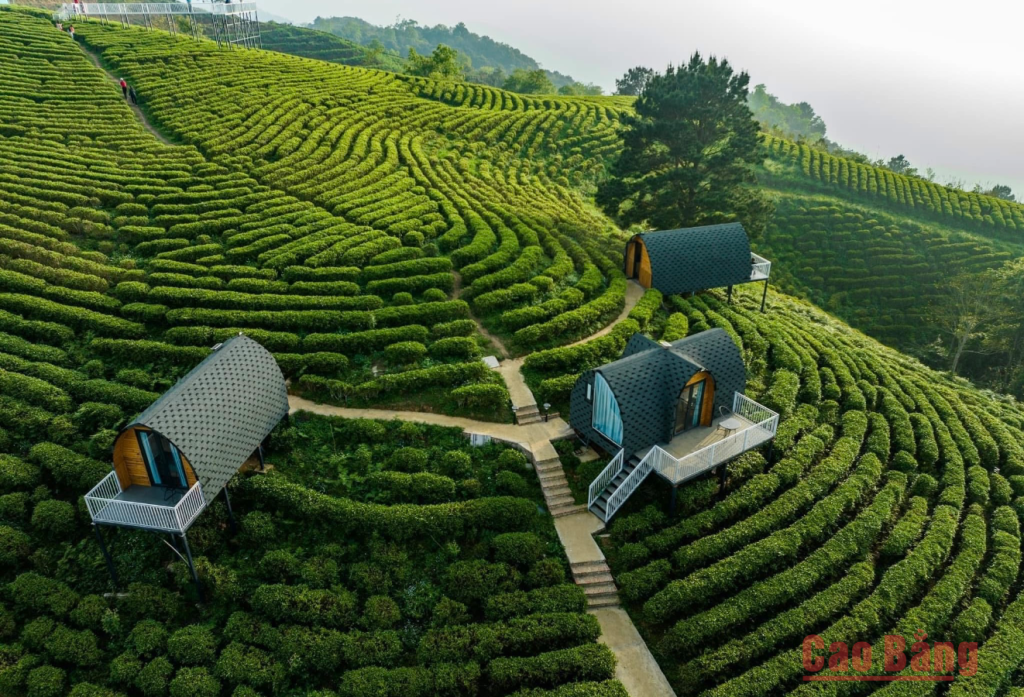
Leaving Phja Oac as the sun rises higher, the journey continues to Kolia Ecotourism Area. If Phja Oac represents the majestic beauty of the vast mountains, Kolia offers visitors a feeling of relaxation and closeness. Green tea hills stretching along mountain slopes, flower gardens blooming throughout the seasons, and a peaceful natural retreat create an ideal stopover after exploring the ancient forest.
The attraction of Kolia lies not in grand constructions but in its approach to tourism development that harmonizes with nature. The natural landscape has been preserved almost intact, creating a rustic yet sophisticated retreat space. Visitors can stroll through tea plantations, enjoy the delicate aroma of Shan Tuyet tea, admire the surrounding mountains, and breathe the fresh air of the highlands.
After sightseeing, visitors can relax at Kolia and enjoy dishes prepared from local specialties such as free-range hill chicken, local pork, forest vegetables, and fresh bamboo shoots. These simple yet distinctive flavours not only enrich the travel experience but also help promote Cao Bang’s unique agricultural products.
The next destination is Ban Phuong Bamboo Forest in Thanh Cong Commune, a cool and peaceful green space with a rare natural beauty. A small path winding through tall bamboo groves opens up a poetic landscape, where sunlight filtering through the leaves creates sparkling patterns along the trail. The rustling bamboo leaves blend with birdsong, creating a tranquil and relaxing atmosphere.
Many visitors choose to walk beneath the bamboo forest, breathe in the fresh air, capture memorable photographs, or simply enjoy moments of peace in nature. This simple and charming beauty has made Ban Phuong Bamboo Forest a favourite stop on the western tourism route.
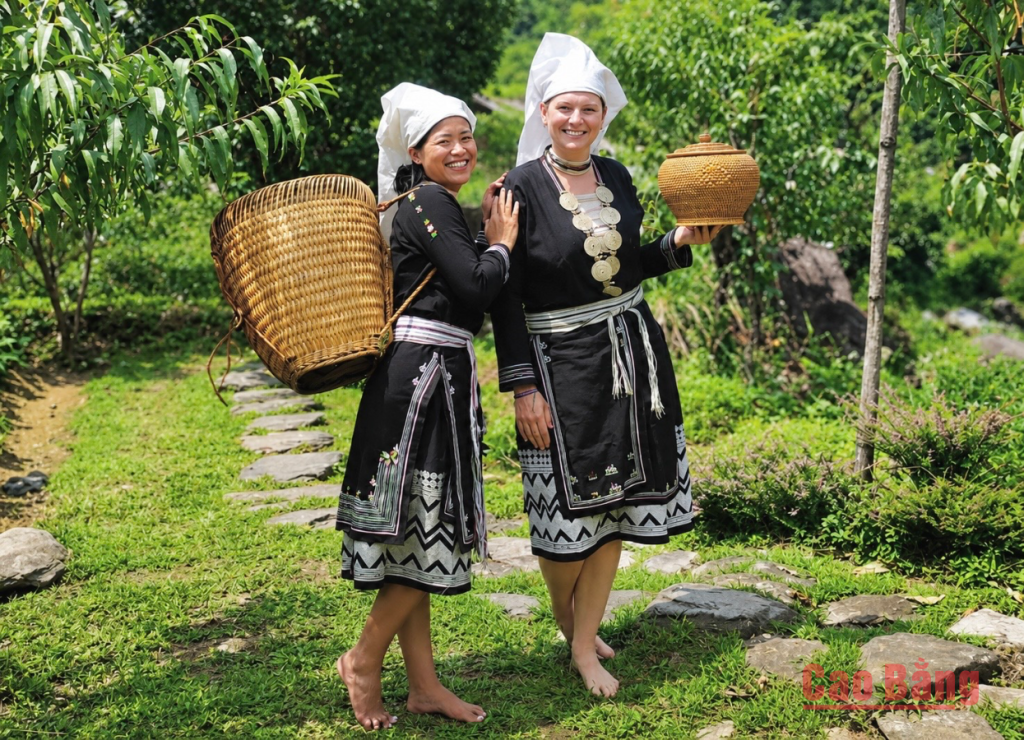
As the afternoon sun begins to fade, the journey concludes at a Dao Tien ethnic village. After experiencing nature, visitors have the opportunity to discover more deeply the local cultural values preserved through generations. Wooden houses nestled against mountain slopes, cheerful conversations, and the hospitality of local residents create a warm and welcoming atmosphere.
In recent years, many local households have developed homestay models associated with preserving traditional cultural identity. Visitors can stay in traditional houses, enjoy local specialties, learn traditional embroidery, join residents in tea picking and forest bamboo shoot harvesting, and listen to stories about the customs and traditions of the Dao Tien people.
Mr. Chu Tien Thanh, owner of Lung Muoi Homestay in Thanh Cong Commune, shared:
"Visitors today are increasingly interested in cultural experiences. They want to enjoy traditional dishes, hear stories about Dao customs, join tea-picking activities, and explore the forest. Therefore, our family does not modernize the house but tries to preserve its original architecture and traditional lifestyle. Developing tourism must go hand in hand with preserving cultural identity; only then will visitors remember and want to return. For me, developing a homestay not only provides additional income for my family but also creates employment opportunities for local people through supplying agricultural products, organizing cultural performances, guiding experiences, and introducing traditional crafts. When culture becomes a tourism resource, people become more aware of protecting the values that belong to their community."
In just one day, the western tourism route offers a complete journey—from exploring primeval forest ecosystems and relaxing in nature to experiencing distinctive green spaces and discovering the cultural life of ethnic communities. Each destination has its own character, yet all are harmoniously connected through the story of the relationship between nature, people, and culture.
One day may be enough to experience the beauty of the route “Experience Phja Oac – The Mountain of Transformation” but it is not enough to discover all the values preserved in this land. Beyond the highlighted destinations, many other landscapes, historical sites, and unique cultural spaces are still waiting to be explored. Each return journey offers new discoveries and deeper appreciation of the beauty of the Non Nuoc Cao Bang heritage region.