Western Experience Route – “Experience Phja Oac – The Mountains of Transformation”
The Western Route – “Experience Phja Oac – The Mountains of
Transformation” in Non Nuoc Cao Bang UNESCO Global Geopark invites visitors to
discover the region’s outstanding geological, ecological, historical, and
cultural values. Each stop along the route represents a different chapter in
time, telling stories of the Earth’s transformations over hundreds of millions
of years, the traces left by people as they explored and settled the land, and
the resilience of local cultural values through the passage of history.
The journey begins at the Lang Mon ancient coral geosite (Minh
Tam Commune), where numerous coral and brachiopod fossils dating back
approximately 400 million years have been preserved. It may be difficult to
imagine that today’s rugged mountains were once a shallow tropical sea, where
coral reefs flourished in clear, shallow, sunlit waters. Preserved within
limestone layers, these fossils not only provide evidence of an ancient ocean
but also help scientists reconstruct palaeoenvironmental conditions and
determine the age of geological formations. The present-day Phja Oac mountain
landscape is the result of continuous tectonic movement, uplift, and
transformation of the Earth’s crust.
Continuing the journey, the Mao Ga Mountain panorama (Tam Kim
Commune), the Dragon-Back panorama (Nguyen Binh Commune), and Tinh Tuc Hanging
Valley (Tinh Tuc Commune) provide an opportunity to observe the effects of
geological and surface processes in shaping the landscape. Visitors can see
differences in rock types, fault zones, and the long-term processes of
weathering, denudation, and erosion. Distinctive mountain forms, winding
ridgelines, steep slopes, and valleys situated at unusual elevations are the
result of millions of years of continuous movement and evolution of the Earth’s
crust. Each landscape is not only visually striking but also provides tangible
evidence of the region’s long geological history, helping explain how the
present-day mountain landscape of western Cao Bang was formed.

Another prominent geological feature of the Western Route is
the formation of the Phja Oac granite massif. Approximately 85–95 million years
ago, magmatic activity deep within the Earth generated intense changes in the
surrounding rocks, giving rise to massive granite bodies and contributing to
the formation of various economically valuable mineral deposits, including tin,
tungsten, and gold. The abundance of mineral resources provided the foundation
for the development of mining in the Phja Oac–Tinh Tuc area throughout the
twentieth century, leaving behind a remarkable legacy of geological, historical,
and industrial heritage.
Today, the Tinh Tuc Tin Mine Geosite (Tinh Tuc Commune), the
Ban O Tungsten Mine, and the Lung Muoi Tungsten Mine (Thanh Cong Commune) still
preserve numerous traces of past mining activities. Mine workings,
ore-processing areas, and surviving technical structures reflect a vibrant
period in the development of the local mining industry. They also help visitors
understand the relationship between magmatic processes and mineral formation,
as well as the role of natural resources in the socio-economic development of
the region.
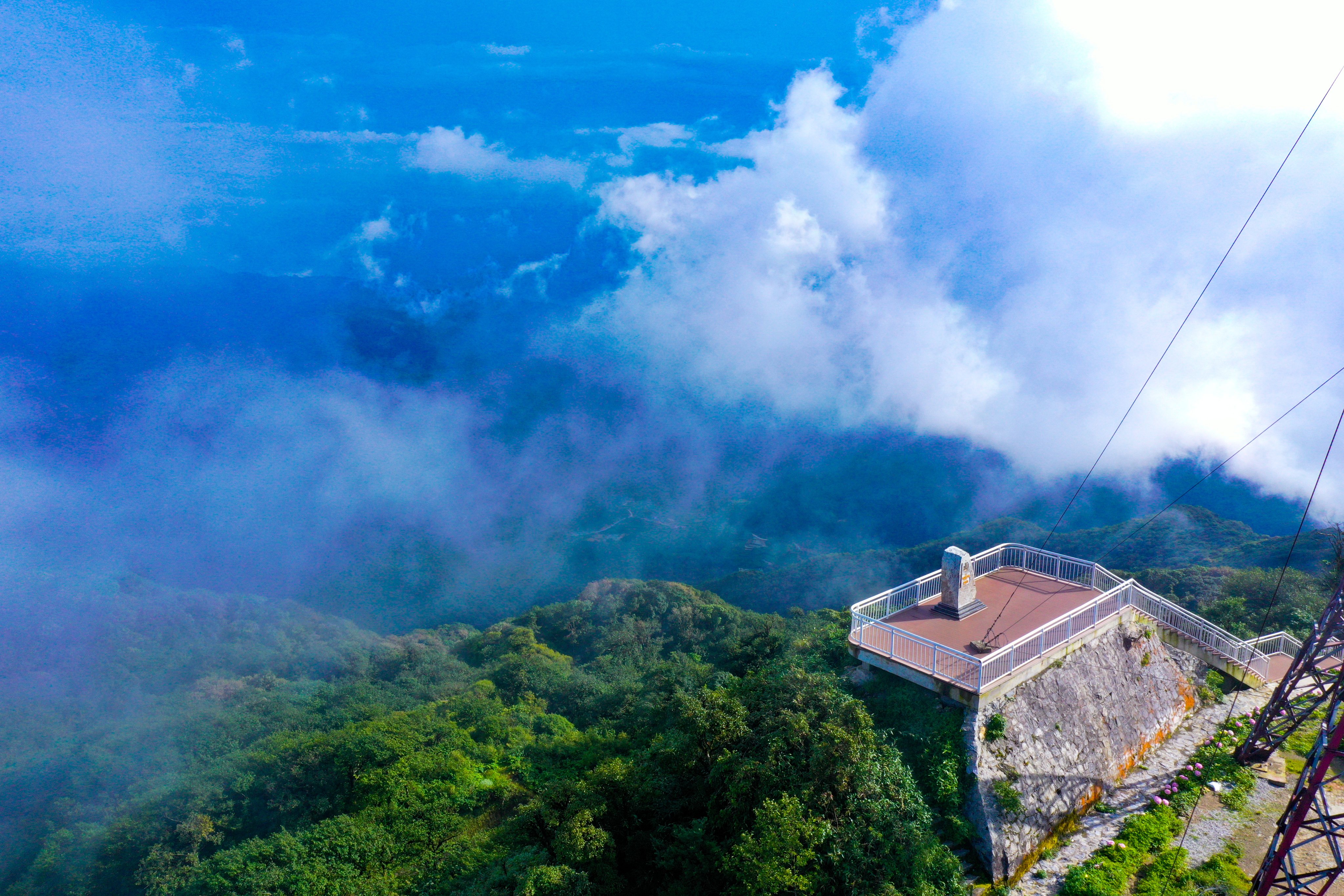
Beyond its geological significance, the Phja Oac mountain
area is also characterized by distinctive ecosystems shaped by changes in
elevation. From the foothills to the summit of Phja Oac at 1,935 metres above
sea level, temperatures gradually decrease while humidity increases, creating
distinct vegetation belts ranging from tropical evergreen forests to
subtropical forests, mossy forests, and high-elevation dwarf forests. The
diversity of terrain, climate, and soils supports rich ecosystems containing a
variety of rare and valuable plant and animal species, while forming the core
zone of Phja Oac–Phja Den National Park.
Amid the forests of Phja Oac, the Red House Villa is one of
the remaining structures that bears witness to the period when the French
exploited mineral resources and developed a mountain resort in the early
twentieth century. Built in a European architectural style, the villa is
nestled among pine forests and the cool climate characteristic of the high
mountains. After more than a century, the building still stands quietly within
the mountain landscape as a witness to history, reflecting the transformations
of the Phja Oac area through different periods.
The Kolia Tea Plantation Geosite is a representative stop in
the Phja Den mountain area, where natural landscapes, distinctive agricultural
production, and ecotourism have been developed in harmony. Amid lush tea hills
at elevations above 1,300 metres, visitors can walk among the tea plantations,
taste Phja Den tea, admire the sea of clouds, and experience the tranquil
beauty of the high mountains. The development of tea cultivation in association
with landscape conservation and sustainable tourism has enhanced the value of
local products, created livelihoods for local communities, and enriched the
visitor experience along the Western Route of Non Nuoc Cao Bang UNESCO Global
Geopark.

The Western Route also takes visitors back to important
milestones in Vietnam’s national history. Tran Hung Dao Special National Relic
Site (Tam Kim Commune) is where the establishment and early activities of the
Vietnam Propaganda Liberation Army, the predecessor of the Vietnam People’s
Army, are commemorated. The site is also closely associated with the
revolutionary life and career of General Vo Nguyen Giap, an outstanding student
of President Ho Chi Minh. Amid the primeval forest, each place name preserves
memories of the difficult yet heroic early days of the Vietnamese revolutionary
movement.
The journey continues to Phai Khat Post (Tam Kim Commune),
where the first battle of the Vietnam Propaganda Liberation Army took place on
25 December 1944. Although relatively small in scale, the victory at Phai Khat
demonstrated the growing strength and capabilities of the revolutionary armed
forces and marked the beginning of a series of victories in the struggle for
national independence. Today, Tran Hung Dao Special National monument and Phai
Khat post serve as important sites for historical education, helping to foster
patriotism and revolutionary traditions among younger generations.
Alongside its geological, landscape, and historical values,
the Western Route also offers visitors an opportunity to discover the
distinctive cultural identity of the Dao Tien community. Traditional brocade
embroidery and beeswax batik have been passed down through generations, with
each traditional costume representing the culmination of entirely handmade
processes of weaving, indigo dyeing, and embroidery. Today, alongside the
development of community-based tourism, these traditional crafts are being
preserved and promoted through hands-on experiences, contributing to local
livelihoods while giving visitors an opportunity to learn about the distinctive
cultural heritage of the Dao Tien community within Non Nuoc Cao Bang UNESCO
Global Geopark.
The Western Route offers far more than an exploration of
geological heritage, landscapes, and biodiversity. It is also a journey into
revolutionary history and the cultural identities of local ethnic communities.
The harmonious connection among nature, history, and people gives the route its
distinctive appeal, contributing to the recognition of the outstanding values
of Non Nuoc Cao Bang UNESCO Global Geopark while promoting sustainable tourism
development that links heritage conservation with local socio-economic
development.